20/10/2026 17:38
Open for Messages or Open for Pickup? Telegram Business Hours for Cambodian Watch-Repair Shops

A customer sees a watch-repair demonstration, opens the shop’s Telegram profile and decides to visit. The profile appears to say the business is open, but the person who handles collections has already left. The promotion attracted attention; the information failed at the counter. For Cambodian watch-repair businesses, opening hours need a precise meaning. Customers should understand when they can visit, when someone will answer messages and when their particular watch is ready. This workflow helps owners make those promises consistent before sharing promotional content or considering an SMM-panel service. All shop situations and sample schedules below are hypothetical.
1. Define what your opening hours promise
Start with the physical experience you can reliably provide. During advertised counter hours, can a customer hand over a watch, collect a completed repair and speak to someone responsible? If only some activities are available, describe the restriction beside the schedule. A workshop can be busy repairing watches while its public counter is closed. Equally, a counter assistant may accept enquiries while the repairer is away.
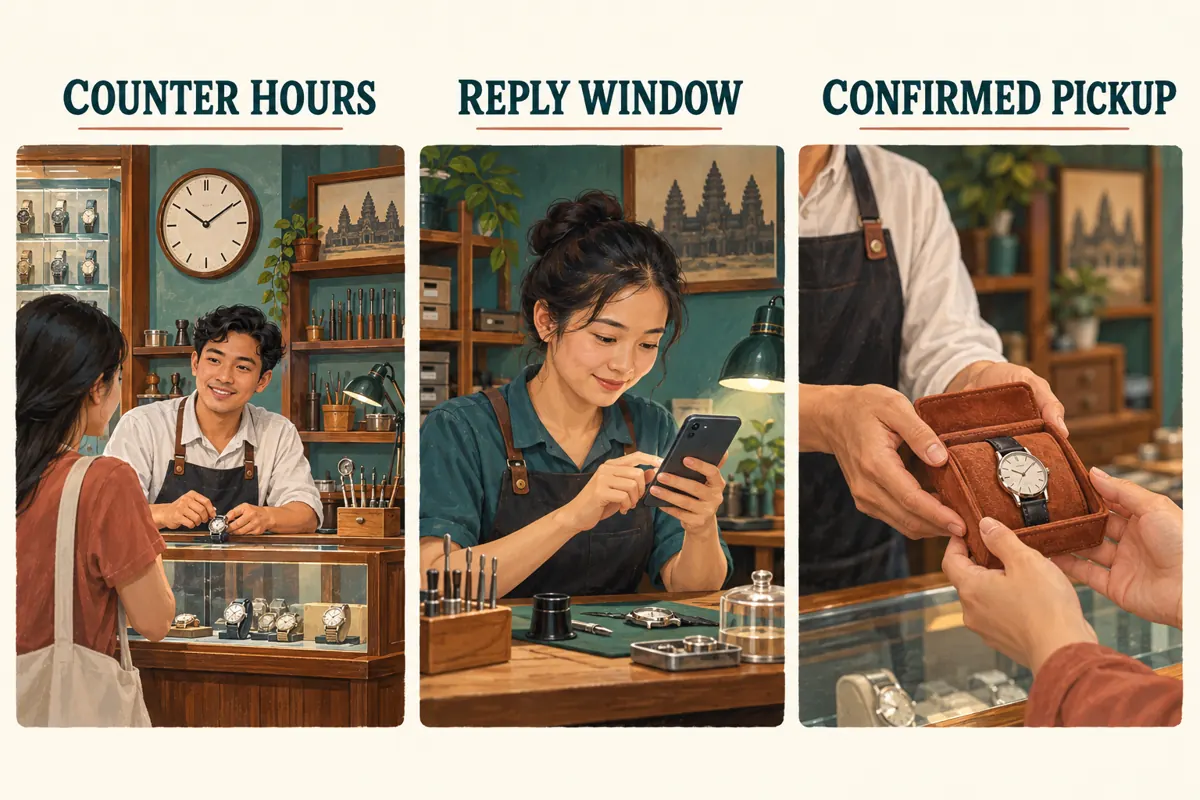
Write three separate statements in your planning notes: counter availability, message response window and collection conditions. For a hypothetical shop, these might be a daytime counter schedule, replies during staffed periods and collection only after an individual confirmation. Do not stretch the public hours merely because the owner sometimes answers from home. A late reply is helpful, but customers should not have to guess whether it also means the door is open.
2. Put the regular schedule in Telegram Business
Telegram’s official Introducing Telegram Business guide says businesses can display operating hours and a map location so visitors can see whether they are open. It identifies Settings > Telegram Business as the place to find business features. The announcement described these features as included for Premium subscribers; check the current access conditions shown in your app before making a purchase.
Use the available opening-hours controls to enter your actual weekly schedule, save it and inspect the resulting profile. Check every day rather than assuming one entry covers the week. Where timezone settings are offered, confirm that the schedule represents the shop’s Cambodian local time. If your counter closes for lunch, represent that break accurately using the controls available, and explain it in your customer-facing wording. If the feature is unavailable to your account, publish a clear written schedule through the channels you already maintain.
3. Keep collection readiness separate from being open
Opening hours describe the business, not the status of an individual repair. A watch may still need inspection, a replacement part or a final check even while the counter is staffed. Give customers an explicit collection message only after the responsible staff member verifies the item. Include the agreed collection day, a practical time window and any information the customer needs to identify the repair privately.
In a hypothetical example, a customer asks whether they can collect a watch on Friday afternoon. The assistant should first check the repair record, then confirm a suitable window. Replying only with the shop’s closing time leaves the main question unanswered. If a relative or courier will collect it, settle the handover arrangement in that private conversation. Keep repair references and personal details out of promotional posts; the public schedule does not need them.
4. Write promotional invitations that match the schedule
Review the final sentence of each repair demonstration or service post. An invitation such as “come now” makes a stronger promise than “message us to discuss your watch.” Choose wording according to what staff can actually handle. A video showing strap replacement can invite viewers to send a clear photo and ask about suitability. It should not imply that every strap is available or that every repair can be completed during one visit.
A hypothetical English drafting example is: “Planning a visit? Check our counter hours and message us first about your repair. Please wait for a collection confirmation before travelling to pick up a watch.” Adapt customer messages to the language your audience uses, with a fluent reviewer checking the meaning. Keep important timing information in readable text rather than hiding it inside a busy image. Someone should understand the next step without replaying the whole demonstration.
5. Handle temporary closures as a separate update
A regular weekly schedule needs an exception process. Staff absence, a supplier visit or a holiday closure can make yesterday’s accurate information misleading. Decide who owns the update and who checks it. For each exception, record the affected date, the actual counter availability, the next expected opening and any customers with confirmed collections. Contact those customers individually when their arrangements change.
Avoid vague notices such as “closed tomorrow” when people may encounter the message later. Use the full date and clearly state that the notice concerns a temporary change. Check whether your current app offers a suitable exception control; otherwise explain the change prominently in customer-facing messages and adjust the regular display when appropriate. Set a reminder to restore the normal information afterward. A temporary closure notice left visible after reopening can create a second round of confusion.
6. Test the journey from a promotional post to the counter
Ask a colleague to follow the same route a customer would take: open the actual promotional post, follow its contact reference and inspect the destination profile. Have them answer three questions without your help: when can I visit, how should I ask about my watch and what proves that collection is confirmed? Their hesitation is useful evidence that the wording needs work.
Test a normal working day, a lunch break and a planned closure using your written scenarios. Compare the profile with any schedule printed at the counter or included in recent promotional messages. Pay attention to two locations using the same business name: customers need to know which branch the hours describe. If a single account handles several counters, explain the relevant location before discussing a visit. Avoid assuming that a profile alone can communicate every branch’s staffing arrangements.
7. Decide whether an SMM-panel service addresses the problem
Before spending, name the problem precisely. Unclear opening hours require better information. Unanswered enquiries require staff capacity. Customers arriving before their watches are ready require stronger confirmation practices. Increasing a visible engagement count does not repair any of these gaps. Resolve the customer journey first, then assess whether a proposed promotional activity has a defensible purpose.
The supplied bongsmm.com catalogue includes the exact public service name “Telegram - Post Views - [ LAST 5 POST ]”. Its title identifies a post-view offering referring to the last five posts, but the supplied description is empty. That is not enough to establish selection rules, audience location, delivery behaviour or any connection to real enquiries. Ask for documented clarification before considering it, particularly if recent posts include an expired closure notice. Purchased engagement is not evidence of genuine interest, sales, advertising delivery or Cambodian users. Do not present it as customer demand.

8. Use a practical go, revise or postpone decision
Proceed with a promotional post when the regular hours are accurate, the next visit instructions are clear and staff can handle the response you invite. Revise it when the repair demonstration is useful but its closing invitation makes an unsupported promise. Postpone a time-sensitive invitation when the counter schedule is uncertain or a temporary closure has not been communicated. This decision applies even if the creative work is already finished.
For a hypothetical Saturday strap-fitting demonstration, the owner discovers that the only person who can assess unusual fittings will be absent. The post could still explain how customers should photograph their existing strap, but it should not invite immediate fitting visits. Change the invitation to an enquiry and give a realistic review window. Record that choice in the content brief so another employee does not restore the original wording while preparing the post for sharing.
9. Measure timing misunderstandings without inventing attribution
Keep a small operational log of questions that reveal confusion: customers asking whether the counter is open, arrivals during a stated break and attempted collections without confirmation. Record the issue and the information the customer says they saw. Avoid collecting unnecessary personal details. Review these notes alongside changes to your schedule wording so the team can identify what remains unclear.
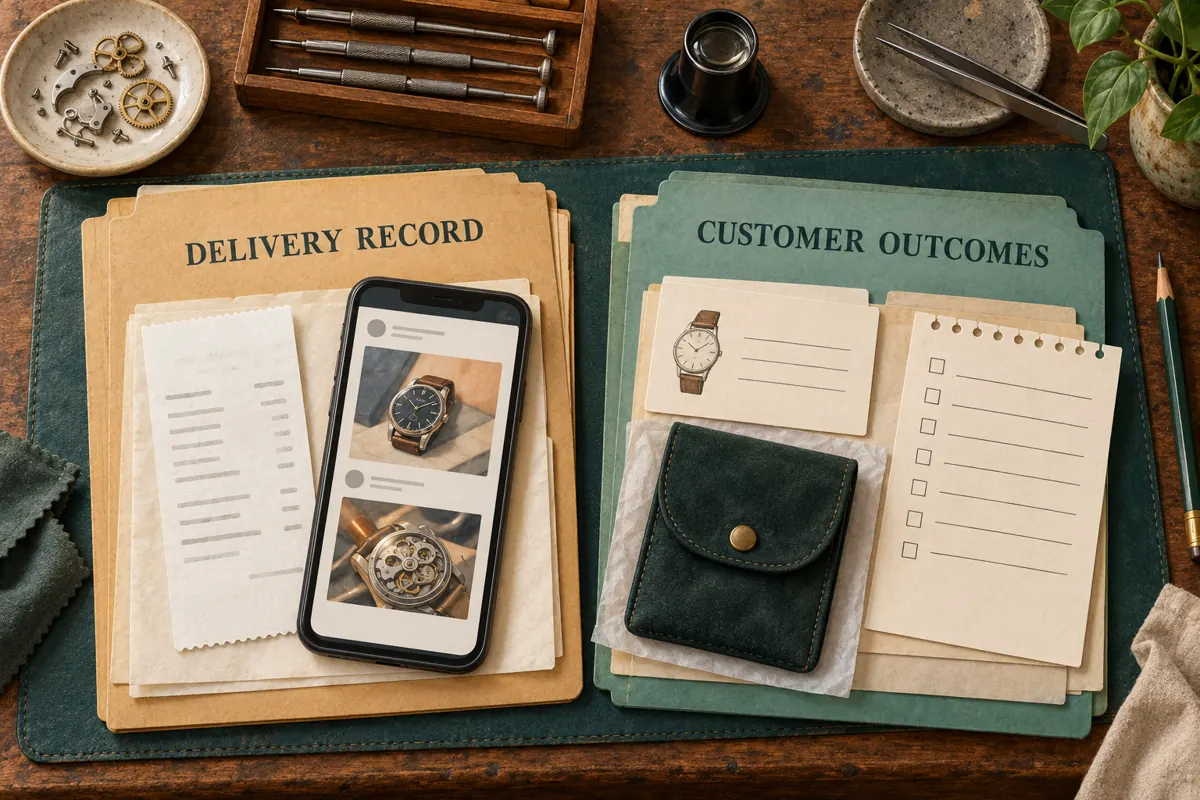
Maintain any panel delivery record separately from these customer observations. A service marked complete cannot show that visitors understood the opening hours. Likewise, a reduction in confused enquiries does not prove that a particular promotion caused it. Staffing, repeat customers and other messages may have influenced the result. Use the review to choose a practical correction, such as making the lunch break easier to find or adding a collection condition. Report actual observations and their limits instead of turning a visible counter into a business conclusion.
10. Fix the mistakes that repeatedly create wasted trips
Common mistakes include advertising the owner’s online availability as counter hours, leaving an old closure notice in circulation and treating “we are open” as confirmation that a repair is finished. Another is allowing several employees to maintain different schedule versions. Keep one approved schedule note, name its owner and make the date of the latest check easy for staff to find.
At the end of each planning cycle, review the next period’s actual staffing before reusing old promotional copy. Check saved invitations, printed notices and the account profile against that schedule. When a customer points out an inconsistency, correct the underlying information as well as answering the individual message. The useful outcome is a customer who knows whether to send a question, arrange a visit or wait for confirmation. That clarity should be in place before any additional effort to draw attention to the shop.
Frequently asked questions
Should I advertise all-day hours because customers can send messages at any time?
Only advertise counter hours that the business can honour. Explain separately when staff normally review messages. The ability to leave an enquiry does not mean someone is available to assess a repair or hand over a watch. If evening replies are occasional, avoid presenting them as a dependable daily service.
What if the repairer is away but the counter assistant is present?
Describe the activities available during that period. The assistant might accept a watch for later assessment or hand over a verified completed repair, depending on your process. Do not promise an immediate technical answer just because the door is open. Give the customer a realistic next step and confirm unusual requests with the repairer.
Do opening hours replace individual pickup appointments?
No. Hours establish when the counter normally operates; a pickup confirmation establishes that a specific item is ready and that the proposed handover works. Before confirming, check the repair status and any agreed collection conditions. If plans change, update the affected customer directly rather than expecting them to notice a general announcement.
Can a post-view service show whether local customers read the updated hours?
A purchased view count cannot establish that Cambodian customers understood the notice or intended to visit. Use actual enquiries and customer explanations to investigate misunderstandings. Even then, distinguish what customers reported from what you infer. The catalogue title alone does not establish audience origin, attention or a connection to completed repairs.
How often should a small shop review its hours?
Review them whenever staffing or counter availability changes, and include a check before publishing a visit-focused promotion. A brief regular review can catch stale information, but exceptions need immediate attention. Assign one person to maintain the schedule and another to verify significant changes from the customer’s point of view.
Explore the current service catalogue, create an account, or ask a specific question through support tickets.
Prepared with AI assistance. Illustrations explain the workflow and do not represent customer results.