20/10/2026 14:01
Can Customers Save the Care Demo? TikTok Downloads for Cambodian Woven-Bag Shops
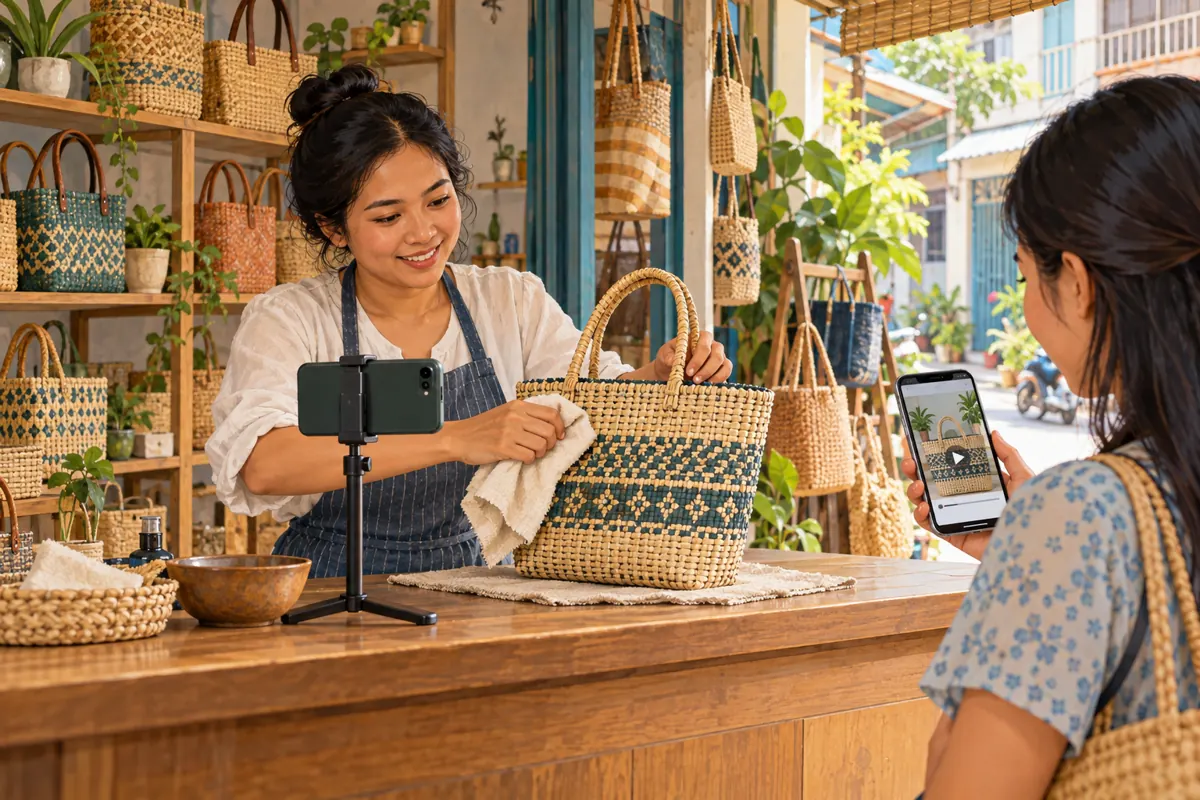
A useful care demonstration should still make sense when a customer watches it away from your shop. For Cambodian businesses selling woven bags, that means identifying the correct material, showing the relevant detail and keeping essential instructions inside the video. Downloads can help customers keep a reference, but they also let an older explanation circulate beyond its original post. This workflow helps a shop decide whether a TikTok care demonstration should be downloadable, prepare it for independent viewing and test the result before promoting it. It also explains why an SMM-panel likes service cannot establish whether anybody saved, understood or followed the guide.
1. Start with one question customers need answered
Choose a narrow question from actual shop conversations: which lining belongs to this model, where the removable insert sits, or how to identify the bag before requesting care advice. Avoid combining cleaning, repairs, storage and ordering into one hurried demonstration. A focused guide is easier to film accurately and easier for a customer to find again.
Consider a hypothetical woven-bag shop in Phnom Penh. A buyer purchases a tote as a gift and wants the recipient to see the shop’s care explanation later. The practical objective is a usable reference for that particular product. The shop first confirms the material and manufacturer’s instructions, then chooses one action it can demonstrate responsibly. This article’s examples describe an editorial workflow, not universal cleaning advice: similar-looking woven bags may have different fibres, dyes, adhesives, handles and linings.
2. Decide whether a downloadable copy suits the content
Ask whether the video would remain helpful without the surrounding caption, comments or current shop offer. A stable explanation of how to identify a model can work independently. A clip dominated by today’s price, temporary stock or a collection deadline is a poor reference file because those details can become inaccurate while the video remains convincing.
Use three practical questions before approving the idea. Does the viewer need to revisit this instruction? Can the essential context fit inside the video? Is the shop comfortable with a copy circulating separately? If the answer to any question is no, revise the concept or provide a different customer resource. For example, a hypothetical Siem Reap shop might separate its weekend promotion from its lining-identification guide. The promotional post can direct interested buyers toward the guide without forcing every saved care video to carry an expiring sales message.
3. Review the download control and its consequences
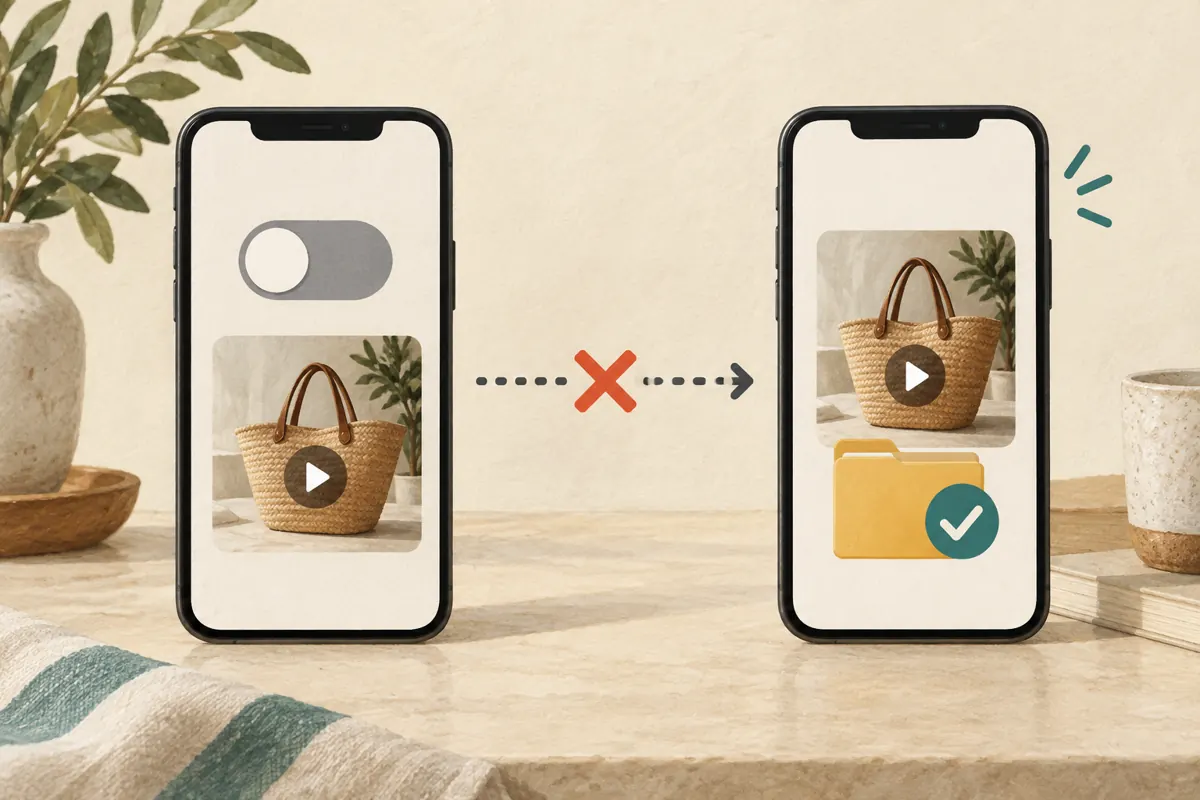
TikTok’s documented route is Profile, Menu, Settings and privacy, Privacy, then Downloads. There, eligible users can switch Video downloads on or off. Private accounts and accounts belonging to users under 16 cannot enable downloads. Disabling the setting covers existing and future posts, but copies previously downloaded remain on other people’s devices. Links can still be shared. These distinctions come from TikTok’s official guidance: [Manage video downloads](https://support.tiktok.com/en/account-and-privacy/account-privacy-settings/video-downloads?lang=pl).
Treat this as an account decision with consequences for the shop’s content collection. Before changing it, review older demonstrations, customer appearances and temporary offers. Assign the decision to the person responsible for the business account, and record the review date. Do not change an account’s privacy simply to complete a marketing checklist. If the available controls do not suit the business, prepare an approved standalone file that staff can provide through an agreed customer channel.
4. Make the video carry its own essential context
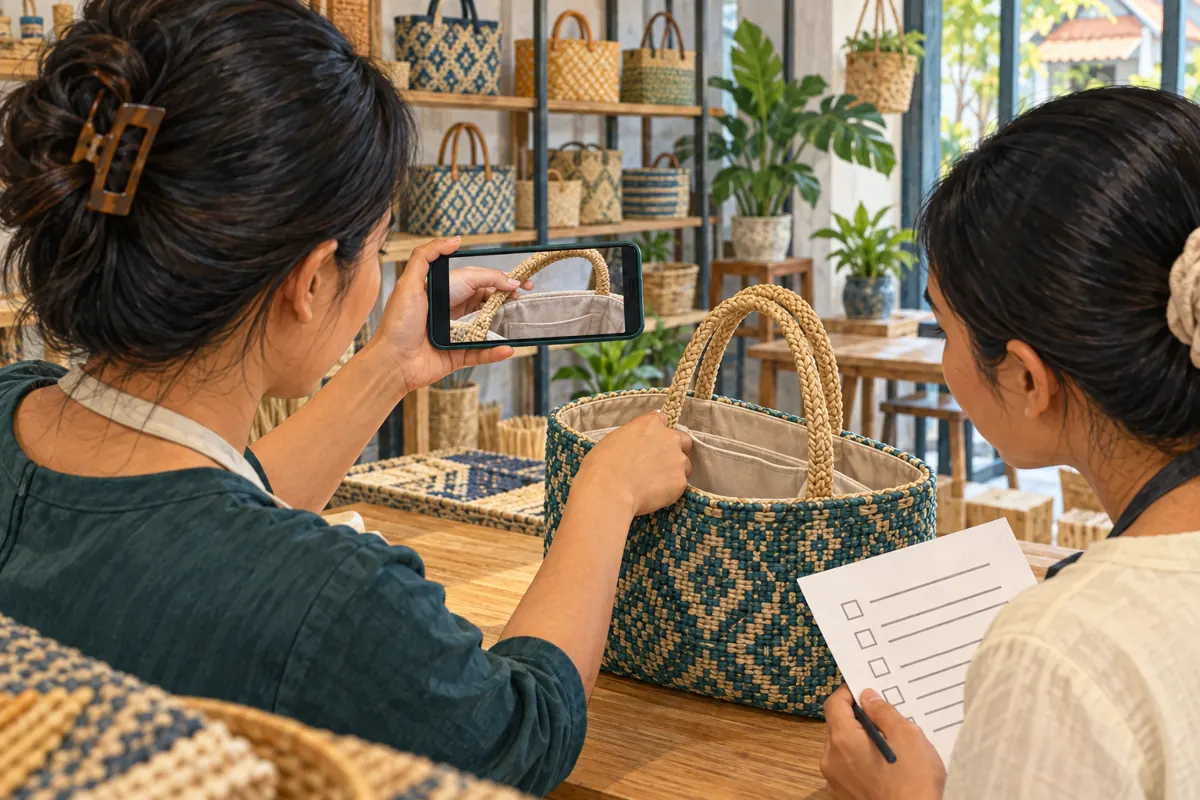
Open with the whole bag, then show the detail that distinguishes the model. Keep the same product visible throughout the explanation. If a removable lining is the subject, show its attachment before demonstrating removal. An attractive close-up of anonymous woven material may look polished while leaving the customer unable to identify whether the advice applies to their purchase.
Include a short model reference and the scope of the guide within the actual edit. Use customer-facing language that your staff have checked; a Khmer-speaking audience should receive understandable Khmer narration or readable Khmer captions. Keep labels brief and allow enough time to read them. Finish with a stable business identifier and a clear instruction to ask the shop when the material or construction differs. Essential restrictions should appear beside the relevant action, rather than being left exclusively in a post caption that a recipient may never see.
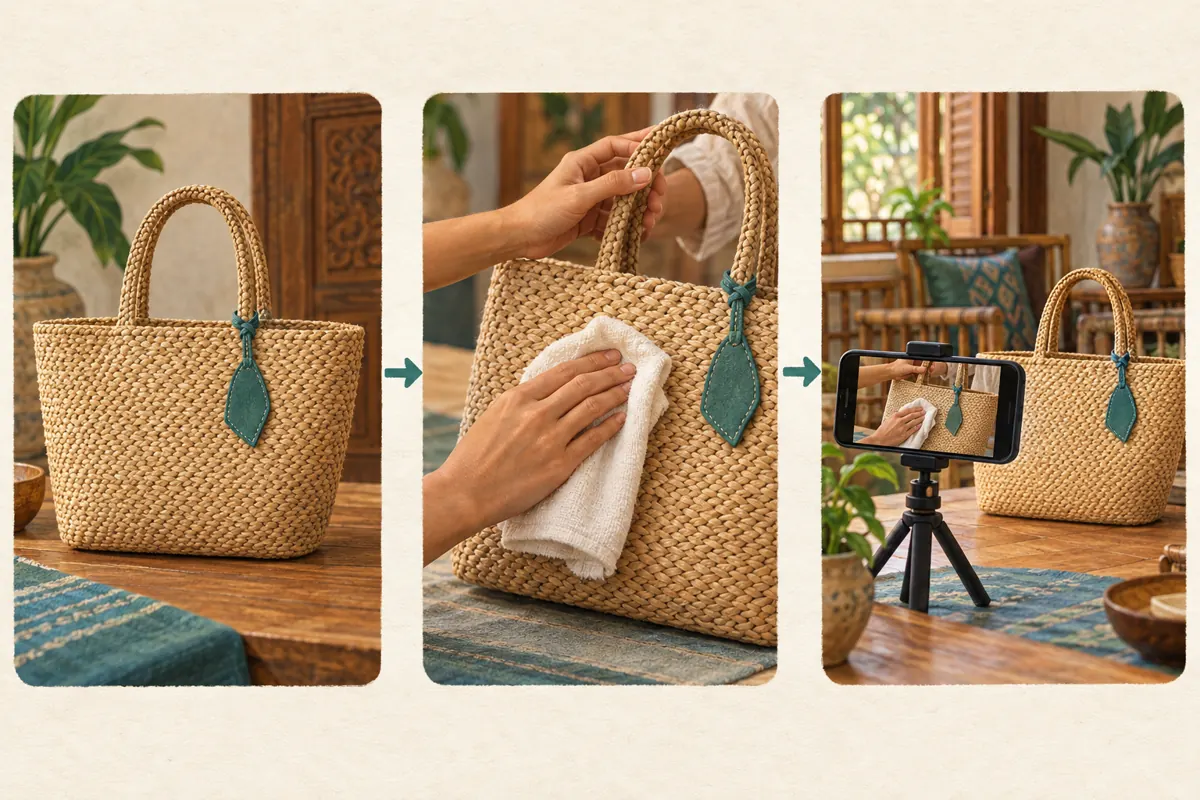
5. Film an explanation that survives ordinary phone viewing
Place the phone securely and give the bag a simple background. Move distracting packaging, receipts and customer details away from the filming area. Show the action at a pace someone can follow, with the demonstrator’s hands clear of the important attachment or seam. Review reflections and shadows: a dark lining can hide the very fastening the video is meant to explain.
Record the spoken explanation close enough to be clear, and avoid relying on background music to carry the scene. Watch the edit once without sound to see whether the visual sequence remains understandable. Then listen without watching to catch vague references such as 'this bit' or 'the other side'. Replace those phrases with identifiable parts. For a hypothetical Kampong Cham shop, a clear view of the lining attachment is more useful than an elaborate opening montage that delays the answer and makes the care sequence difficult to locate.
6. Test the saved file from the customer’s perspective
TikTok describes downloading a permitted video by opening it, tapping Share and choosing Save video. Its help page also recommends retaining an offline copy before posting. Use the documented controls rather than third-party download workarounds: [Download content](https://support.tiktok.com/en/using-tiktok/exploring-videos/video-downloads?lang=ar).
Have an authorised colleague test the published guide from a separate viewer account. Ask them to save it through the normal interface, open the resulting file in the device’s gallery and play it without returning to the post. Check the opening identification, sound, caption readability and complete ending. Then ask them to describe which bag the advice covers and when they should contact the shop. Record specific confusion rather than a simple 'looks good'. If they cannot identify the relevant model, revise the explanation before using the guide in customer conversations. A successful file transfer alone does not establish a successful lesson.
7. Connect the guide to customer service and promotion
Give staff a consistent sentence for offering the resource: 'This guide shows the lining used in this model; please compare yours before following it.' At pickup, staff can show the relevant detail on the physical bag and help the buyer recognise it in the video. For delivery orders, offer the approved guide through the customer’s existing conversation when appropriate, without adding unrelated promotional messages.
The public post should explain who the guide helps and what it covers. Invite a useful question, such as whether the customer’s lining attachment matches the demonstration. Avoid asking viewers to post order numbers, addresses or payment evidence publicly. If someone reports a mismatch, move the product-specific discussion to the shop’s normal private support route. This makes the demonstration part of a practical service process: the content answers a recurring question, while staff remain available for products that require a different explanation.
8. Keep SMM-panel services separate from download readiness
A supplied public catalogue example is “TikTok - Story Likes ~ 20k ~ 10k/days ~ INSTANT”. Its title describes a Story-likes offering; the brief provides no supporting description. It does not establish any ability to enable video downloads, supply a care-guide file or verify comprehension. The quantities and timing language in the name are catalogue wording, not independently verified commitments. It is also a different content format from the ordinary video workflow described here.
TikTok states that it prohibits fake engagement, including services that artificially increase likes or followers. Review that boundary before considering a panel purchase: [How TikTok counters deceptive behaviour](https://newsroom.tiktok.com/how-tiktok-counters-deceptive-behaviour?lang=en-150&trk=article-ssr-frontend-pulse_little-text-block). Purchased engagement is not evidence of genuine interest, sales, advertising delivery or Cambodian viewers. For this objective, prioritise accurate production, customer testing and responsive support. A service-order completion record cannot certify that the care guide works.
9. Prepare for corrections before distributing the guide
Keep an internal record of the approved source video, model reference, publication date and person who checked the instructions. Use a simple revision label in your production notes so staff can distinguish the current guide from an earlier edit. When a supplier changes a lining, attachment or material, compare the new product against the existing demonstration before continuing to distribute it.
If an instruction needs correction, pause further sharing while the responsible staff member checks the replacement. Explain the specific change in the updated customer guidance, especially when it affects how someone should handle the product. Contact customers you can appropriately identify as recipients when the correction matters to their use. Do not assume that changing the public post updates every file already in circulation. Keeping temporary prices and promotions out of the care footage reduces the number of avoidable revisions, although it cannot eliminate product-related changes.
10. Review usefulness without inventing success
Maintain a small log of questions the guide resolves and questions it leaves open. Useful entries describe an observable event: a customer identified the lining correctly, asked about a different handle material or needed a clearer view of the attachment. Record what happened without turning an isolated conversation into a claim about all viewers. If staff repeatedly explain the same missing detail, that is a reason to improve the footage.
Common mistakes include treating a like as a download, treating a download as comprehension and treating a quieter inbox as proof that the guide solved everything. Fewer questions can have several explanations. Compare customer comments with staff observations and the actual content before drawing conclusions. Keep any panel delivery records separate from this review. The next editorial decision should be concrete: reshoot the hidden fastening, simplify the model label or produce a separate guide for the other lining. That gives the shop a useful improvement instead of an unsupported performance story.
Frequently asked questions
Should every product video become a downloadable care guide?
No. Choose content that benefits from repeat viewing and contains enough context to stand alone. A temporary sale announcement or a demonstration covering several unidentified materials is a weak candidate. Make a focused guide first, then decide how customers should receive it.
Why is testing from the shop owner’s account insufficient?
The owner’s experience does not establish what another viewer can do or understand. A colleague using a separate viewer account can check the customer route and review the saved file independently. Ask them to identify the product and explain the instruction without coaching.
Does disabling downloads recover an outdated guide?
No. Previously saved copies remain on recipients’ devices. A correction process therefore needs an updated guide, clear staff instructions and appropriate follow-up with known recipients. Do not describe the old version as fully withdrawn merely because the account setting changed.
Can an SMM-panel likes order help diagnose a missing download option?
It does not test or configure the relevant account control. Review TikTok’s download guidance and the actual viewer experience first. A catalogue title about likes provides no evidence that the service can resolve file access, and artificial engagement raises platform-policy concerns.
What should staff do when a customer’s bag looks slightly different?
Pause the instruction and confirm the model, material and construction through the normal support conversation. Request only the product detail needed for identification. Do not guess that a similar colour or weave means the same care method applies.
Explore the current service catalogue, create an account, or ask a specific question through support tickets.
- TikTok Help Center: Manage video downloads
- TikTok Help Center: Download content
- TikTok Newsroom: How TikTok counters deceptive behaviour
Prepared with AI assistance. Illustrations explain the workflow and do not represent customer results.