20/10/2026 01:22
Staff Can Watch, Shoppers Cannot: TikTok Post Privacy for Cambodian Window-Blind Shops
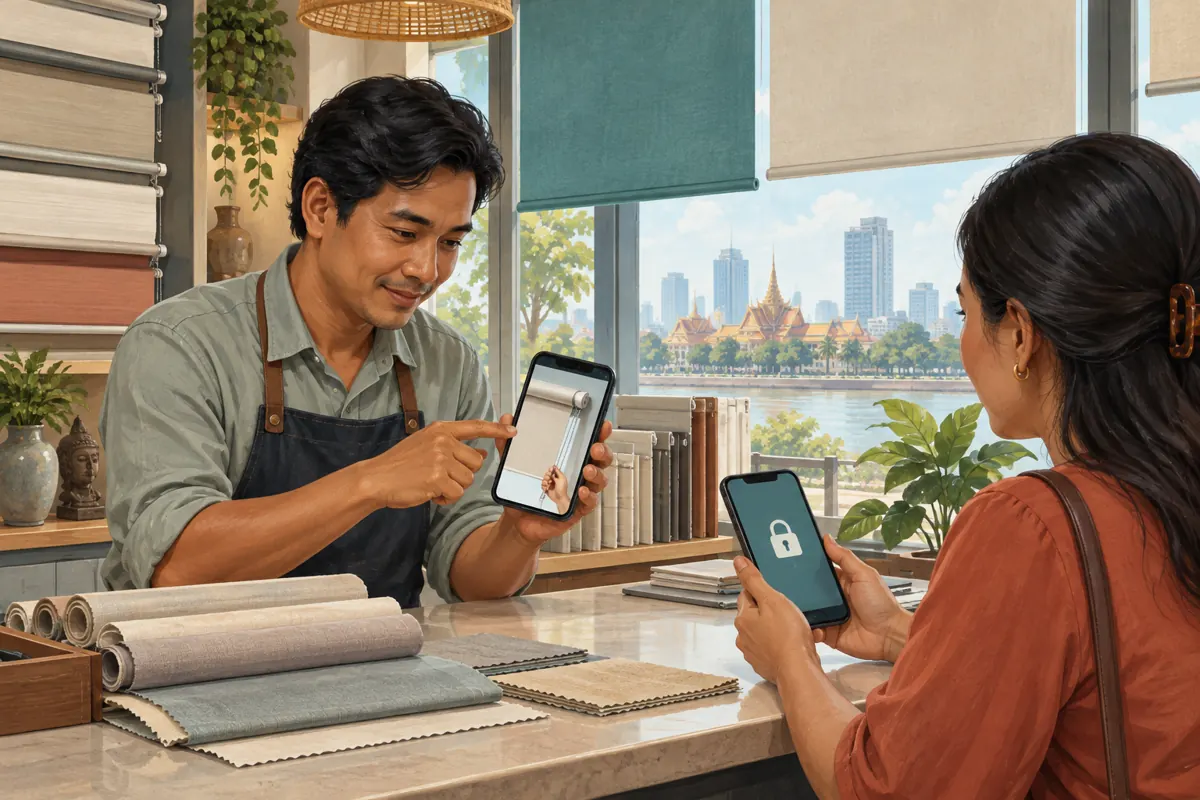
A window-blind demonstration can look ready on the shop owner's phone while remaining inaccessible to a potential customer. Before rewriting the caption or considering an SMM panel service, establish whether a new shopper can actually watch the intended post. For Cambodian businesses promoting made-to-measure blinds, this matters because the video may explain fabric transparency, operating mechanisms or the measurements needed for an enquiry. This workflow separates access problems from content problems, checks whether the footage belongs in public, and gives staff a repeatable way to verify the customer journey. An accessible demonstration creates an opportunity to explain the product; it does not guarantee attention or orders.
1. Start with the exact customer complaint
Consider a hypothetical Phnom Penh window-blind shop. An employee records a showroom demonstration and shares its TikTok link with colleagues. Everyone on the team says it works. Later, a shopper requesting a light-filtering blind says the video will not open. The employee assumes the shopper copied the link incorrectly and sends it again. Nothing changes. The useful first question is whether the team tested under the same viewing conditions as someone encountering the shop for the first time.
Ask which link the shopper opened and what appeared instead of the demonstration. A loading screen, an unavailable-content message and an unrelated video are different observations. Record the wording without requesting account credentials or an unedited screenshot of private conversations. Match the reported link to the intended clip using its opening scene, product and caption. This prevents staff from diagnosing one post while the customer is struggling with another.
2. Separate account privacy from the post audience
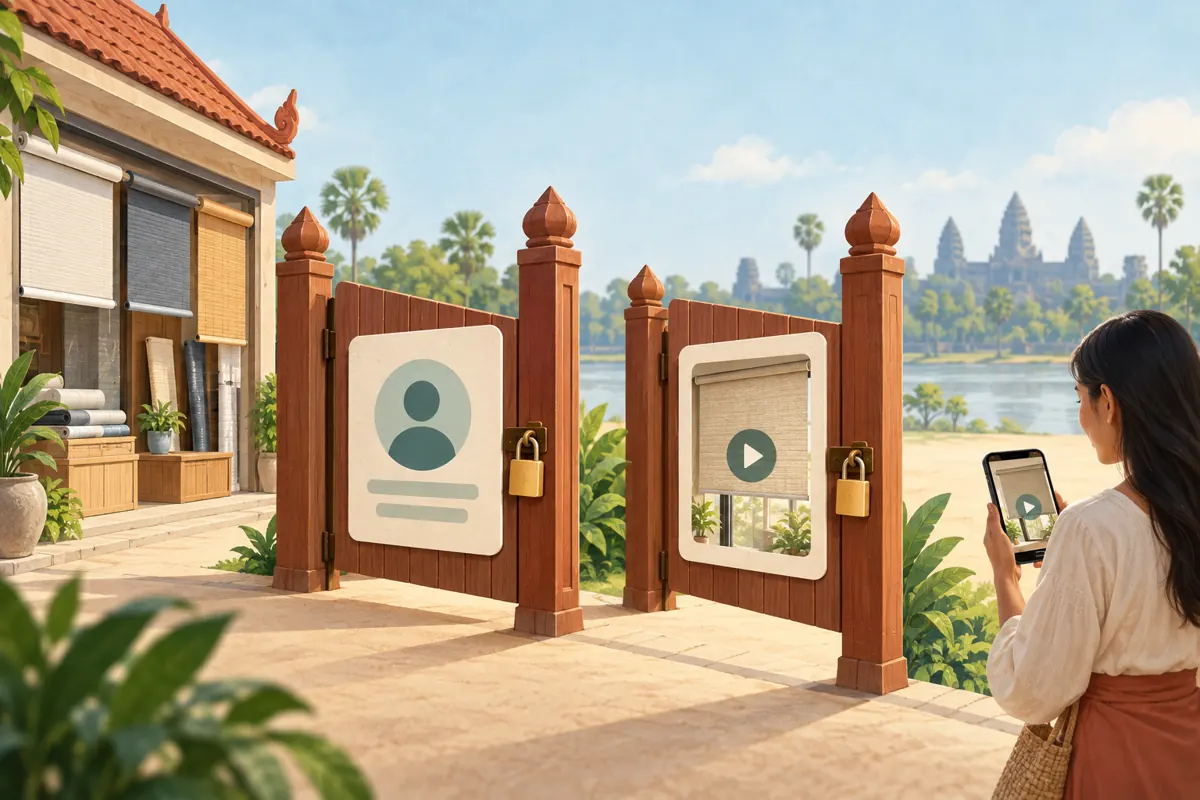
TikTok's Post privacy settings guide explains that individual posts have audience controls. A public account can offer Everyone, Friends or Only you; a private account can offer Followers, Friends or Only you. Friends means followers the account follows back. Consequently, a colleague's successful viewing does not establish access for an unfamiliar shopper. Account privacy and the selected post audience both deserve inspection.
Write down the shop's intended audience before changing anything: for example, adults comparing showroom products before requesting measurements. Then compare that intention with the actual settings. Treat a mismatch as a decision to review, rather than an instruction to make every video public. If the account also contains personal footage or customer-specific work, stop and assess that material first. TikTok's account-privacy guidance explains that public content may be visible and shared beyond TikTok. A business promotion should therefore be suitable for strangers as well as existing contacts.
3. Decide whether this demonstration belongs in public
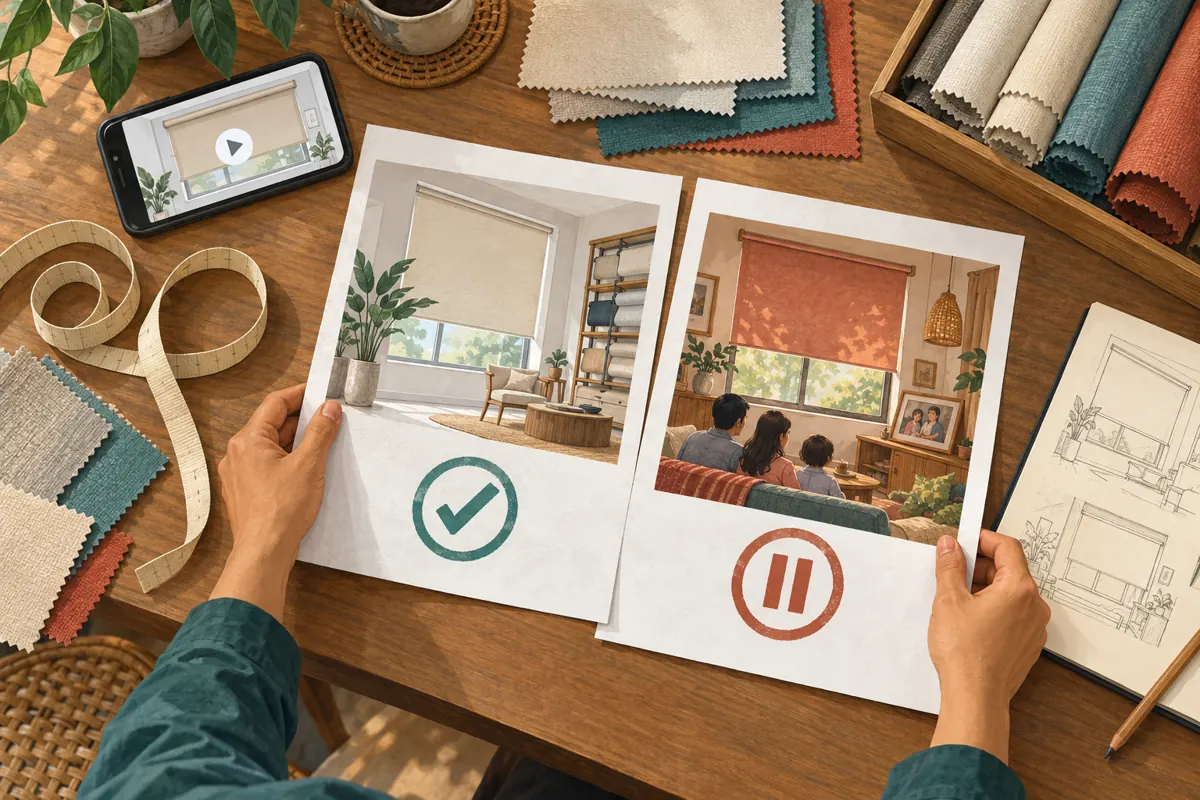
Watch the whole clip with the sound on before widening its audience. Window-blind installation footage can reveal more than fabric: a home's interior, family photographs, paperwork on a table or a spoken customer name. Check reflections in glass and mirrors, too. Permission to enter a property for installation should not be treated as permission to use its interior in advertising. If the team cannot establish appropriate permission, prepare a showroom demonstration using a neutral window instead.
Also review the commercial meaning. A sample filmed against bright daylight may help explain transparency, but it should not become an unsupported promise about every room. Identify the demonstrated fabric and distinguish an example installation from the options currently available. For a hypothetical Siem Reap shop, the best public version might show the mechanism and sample material while leaving the customer's room out entirely. Choose that version before undertaking the access test.
4. Inspect the correct post and make one deliberate change
For an existing post, TikTok documents this route: open Profile, select the post, open More options, then Privacy settings and choose the viewing audience. Available controls should be checked in the app rather than inferred from an old screenshot. Confirm the opening scene again before saving a change, especially when several demonstrations show similar beige or grey fabrics.
Assign one staff member to make the approved adjustment and another to verify the outcome. Keep the caption, product offer and sharing route unchanged during this check so that a successful retest is easier to interpret. Note the original setting, the new setting and the reason. If the expected option is missing, inspect the account context and official help before proceeding. Do not change unrelated controls simply to make the screen resemble a tutorial, and do not give a service provider the shop's login to troubleshoot visibility.
5. Run a viewer test that resembles a new enquiry
Use a willing adult tester who is not signed into the shop account and does not already follow it. Send the exact link through the route a shopper would use, such as an existing enquiry conversation. Ask the tester to open it without following the shop first. Have them describe the opening scene and whether the demonstration plays. This checks the destination and the viewing experience together, rather than relying on a reassuring thumbnail preview.
Record whether the tester used the TikTok app or a browser and whether they were signed in. These details help explain differences between attempts. A signed-out browser check can supplement the test, but a login prompt alone should not be diagnosed as proof of a private post. If the result is unclear, repeat once under a clearly described condition. A successful test supports a narrow statement: that person could open that post under those conditions. It does not establish universal access across every device or region.
6. Separate an access failure from weak interest
Once the independent tester can play the clip, investigate any remaining complaint on its own evidence. Ask whether the customer opened the same destination and whether the problem occurs in the app, browser or both. Preserve the exact message displayed. If TikTok presents an account or content notice, review that notice through the platform's own tools. Avoid diagnosing a restriction merely because a video received little attention.
For the blind shop, a playable video with few enquiries raises different questions. Does the demonstration identify the material? Can viewers distinguish light filtering from the specific effect being shown? Does the next step explain what information the shop needs? A hypothetical shopper might understand the mechanism yet remain unsure whether installation is offered in their area. Clarifying that uncertainty is a content improvement. Changing visibility repeatedly would not answer it. Keep technical access, product understanding and willingness to buy as separate review items.
7. Apply a clear stop rule before considering panel services
The supplied bongsmm.com catalogue includes the exact listing “Tiktok Reposts ~ Max 5k ~ 5k/day ~ Instant ~ 𝐍𝐎 𝗥𝗘𝗙𝗜𝗟𝗟”. Its title identifies it as a repost listing, but the supplied description is empty. The wording alone does not verify delivery speed, account quality, Cambodian audience origin or suitability for a particular post. It also does not establish that the listing can resolve an access problem. No panel service should be treated as a substitute for the viewing test.
TikTok's Integrity and Authenticity guidelines prohibit services that artificially increase engagement and describe possible enforcement against inauthentic activity. Review that policy before considering any engagement purchase, and decline services that conflict with it. Purchased engagement is not evidence of genuine interest, sales, advertising delivery or Cambodian viewers. If a panel request already references the affected post, preserve its order record and ask support about documented options. Do not assume that changing visibility cancels an order, qualifies it for a refund or makes delivery appropriate.
8. Give the accessible demonstration a useful enquiry task
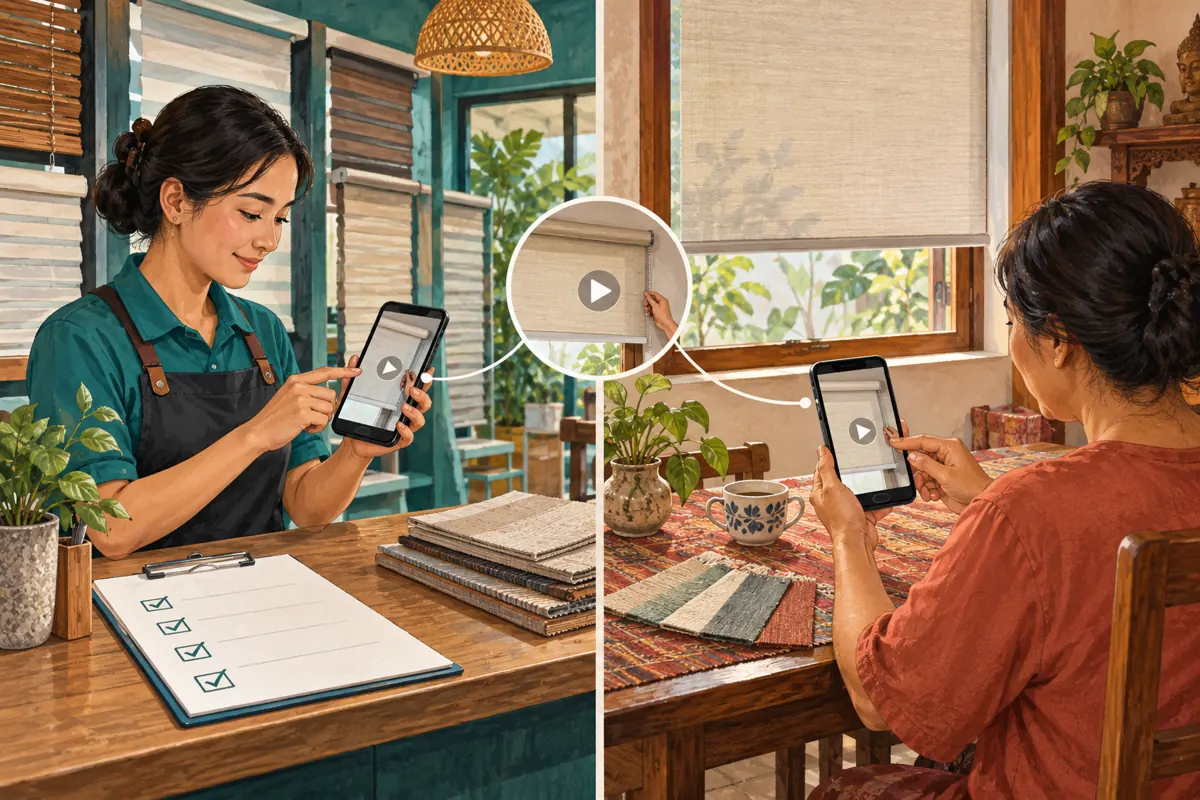
After access is verified, make the next action specific enough for a customer to complete. A blind shop could ask which demonstrated fabric they mean, their general installation area and whether they need measuring assistance. Avoid asking people to put a full home address in a public comment. Explain where a detailed enquiry should go, and have staff check that destination during ordinary working hours.
In a hypothetical Battambang example, the demonstration compares how two showroom samples transmit daylight. The accompanying message asks shoppers to identify the sample and describe the room's purpose before requesting a quotation. Staff can then explain what further measurements are required. This creates a useful conversation without suggesting that a video can establish a final installation price. Keep the promoted material tied to a real service the shop can provide, including any limitations on travel or measuring appointments. Access is valuable when the information behind it helps someone decide.
9. Record the change without inventing a performance story
Maintain a compact record containing the post link, product shown, intended audience, approved change, test conditions and result. Use Cambodia local time consistently so another employee can understand when the check happened. TikTok says that changing a post's privacy setting does not reset its accumulated view count. An existing total therefore should not be presented as a fresh result of the visibility correction.
For business review, track actual enquiries separately. Note whether someone asked about the demonstrated fabric, requested measuring assistance or needed clarification about service coverage. Record uncertainty when the source of an enquiry is unknown. If several changes happened together, avoid attributing later activity to privacy settings alone. A useful internal conclusion might be that the visitor test passed and staff now have a verified demonstration to send. That is a meaningful operational improvement even before there is enough evidence to discuss sales.
10. Avoid shortcuts that make the diagnosis harder
The most common shortcut is asking another employee who already follows the shop to confirm access. That repeats the original test rather than resolving its weakness. Another is deleting and uploading the video again before inspecting the audience setting. A replacement creates another destination to manage and can leave old messages pointing at the wrong material. Preserve the original reference while deciding whether the content needs replacement.
Do not make an entire mixed personal-and-business account public just because one sales clip needs a wider audience. Do not follow customers back merely to make a restricted demonstration work. Do not promise that an access correction will improve recommendations or generate enquiries. Give one employee ownership of the final check, retain an approved showroom alternative when customer footage is unsuitable, and recheck access whenever the team intentionally changes the post's audience. These habits keep promotion decisions tied to observable conditions.
Frequently asked questions
Does a public shop account mean every demonstration is public?
No. Individual posts can have narrower audiences. Review the exact demonstration rather than relying on the account's general appearance. The practical test is whether someone outside the staff's existing follower relationships can open the intended link under recorded conditions.
Should we ask the customer to follow us before watching?
For a demonstration intended to help new shoppers evaluate a product, requiring a follow adds an unnecessary step. First decide whether the clip is suitable for public promotion. If it intentionally contains restricted material, provide an approved public alternative instead of pressuring the customer to change their relationship with the account.
Can a repost service make a restricted video available?
Do not assume that it can. A catalogue title does not establish control over TikTok's audience settings, and the supplied repost listing has no explanatory description. Resolve visibility in the platform's own controls and review its prohibition on artificial engagement before making a service decision.
What if the independent tester can watch but one shopper still cannot?
Compare the exact link, displayed message and viewing route. Ask whether the shopper is using a browser or the app, without requesting their password or access to their device. The successful test narrows the investigation; it does not prove that the customer's experience is mistaken.
When should the shop create a new demonstration?
Create a replacement when the existing footage is unsuitable for public use, identifies the wrong product or cannot explain the offer accurately. Film a neutral showroom version, verify its destination and update the places where staff share it. A visibility mismatch alone should be inspected before deciding to replace otherwise useful content.
Explore the current service catalogue, create an account, or ask a specific question through support tickets.
- TikTok Help Center: Post privacy settings
- TikTok Help Center: Choosing between a private or public account
- TikTok Community Guidelines: Integrity and Authenticity
Prepared with AI assistance. Illustrations explain the workflow and do not represent customer results.