22/10/2026 20:05
Whole Flask or Lid Detail? YouTube Thumbnail Testing for Cambodian Thermos Shops
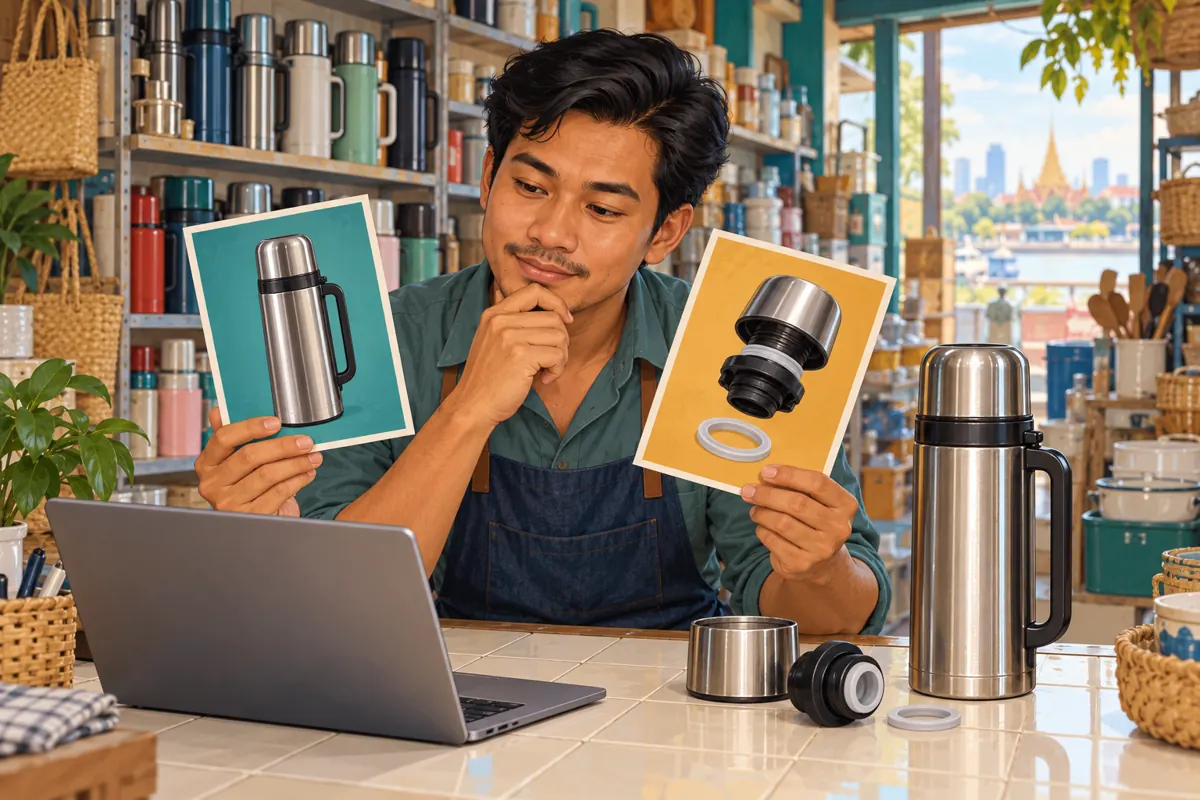
A thermos shop can publish a useful cleaning demonstration yet leave viewers unsure what the video teaches. A photograph of the whole flask suggests a product introduction. A close-up of the lid and removable seal suggests a specific care lesson. Both pictures can be accurate, but they make different promises. For Cambodian businesses promoting practical demonstrations on YouTube, choosing between them is a useful editorial question. This guide follows a hypothetical household-goods shop in Phnom Penh as it prepares a thumbnail comparison, checks the viewing experience, and records what the result actually establishes. It also explains why an SMM panel listing for likes cannot answer whether a thumbnail attracts suitable viewers or produces local buying interest.
1. Start with the question the video answers
In this hypothetical example, the shop has filmed a demonstration of removing and replacing the washable seal in one particular thermos lid. The video follows that model’s care instructions. It does not compare heat retention, repair every leaking flask, or establish compatibility with other lids. The thumbnail needs to communicate this narrow lesson before anyone presses play.
Write a one-sentence brief: help owners recognize that this video explains the removable lid seal on the demonstrated model. Then write the creative question: does showing the whole flask or showing the lid assembly communicate that lesson more clearly? This gives the comparison a purpose beyond making the cover look attractive. It also helps the owner reject images that promise a different demonstration.
2. Choose a useful video before making alternatives
Select a demonstration whose information remains useful during the review period. A care guide is easier to evaluate calmly than a clearance announcement that expires tomorrow. Watch the actual upload from beginning to end. Confirm that the featured product, spoken explanation, and enquiry instructions still match what the shop can support.
For a Cambodian audience, consider language and purchasing context separately. A Khmer explanation may help viewers understand the procedure, while a visible model marking helps them identify the item. Neither establishes that everyone watching is in Cambodia. If customers can enquire from different provinces, explain how to send a lid photograph and model reference without implying that delivery or replacement parts are automatically available.
3. Prepare two genuinely different, equally honest images
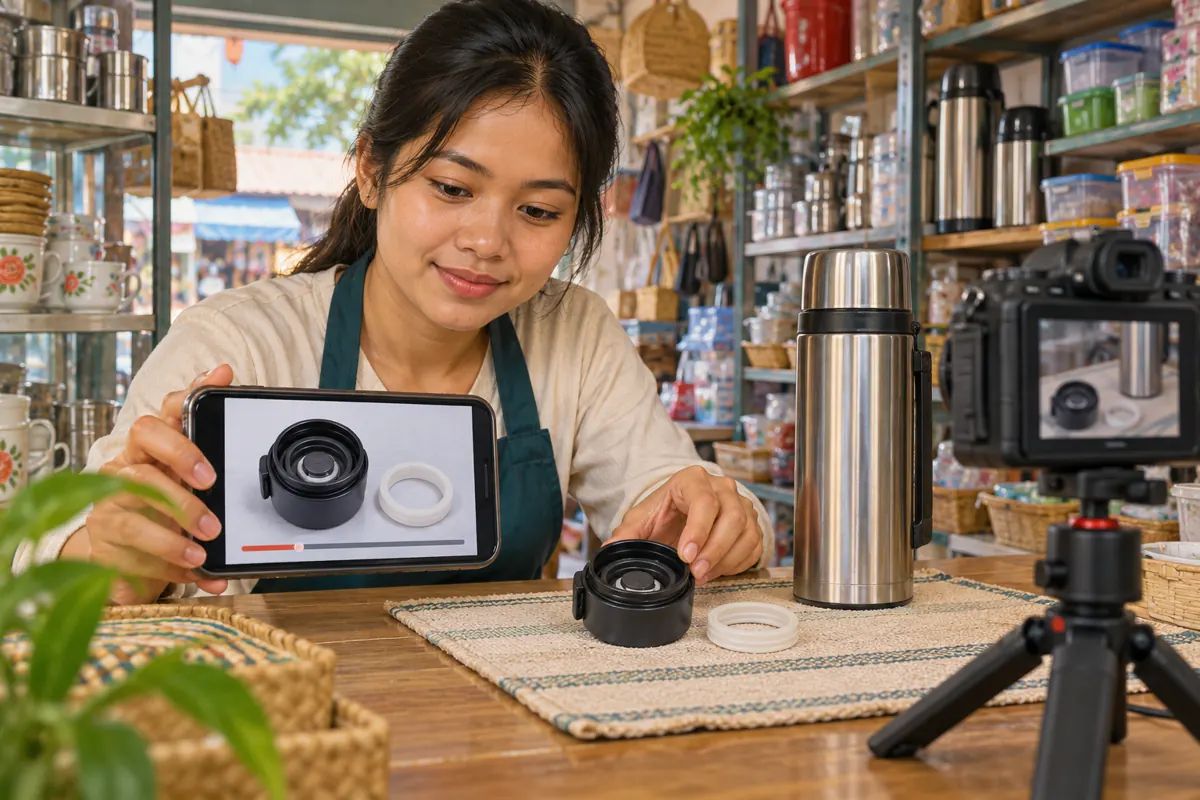
Make the first candidate a clear view of the complete flask, with its lid visible. Make the second a close view of the opened lid and removable seal. Use the same demonstrated product, similar lighting, and an uncluttered background. The useful difference is what each picture emphasizes. Avoid comparing a carefully photographed image against a deliberately poor one.
Keep the title fixed for this exercise so the team can discuss the visual question clearly. If text is necessary, use the same short wording on both candidates and ask a fluent Khmer reader to check it. Avoid invented before-and-after damage, exaggerated dirt, or a replacement seal that does not belong to the product. Those changes would introduce promises the video cannot support.
The article’s illustrations explain planning concepts. For the shop’s actual thumbnails, photograph its own demonstrated product so details such as lid shape and seal placement are accurate.
4. Check understanding before opening the testing tool
Show each candidate at roughly the size someone might encounter while browsing on a phone. Ask a colleague who did not edit the video what they expect to learn. Do not ask which picture they like first. A preference for brighter lighting tells you less than an expectation that the video explains how a seal fits.
In a hypothetical review, a colleague might interpret the complete-flask image as a sales presentation and the close-up as a parts-identification guide. That observation does not predict a platform winner. It reveals whether the pictures convey the intended subject. If both suggest the wrong lesson, revise them before testing. A platform comparison cannot repair a basic mismatch between the cover and the content.
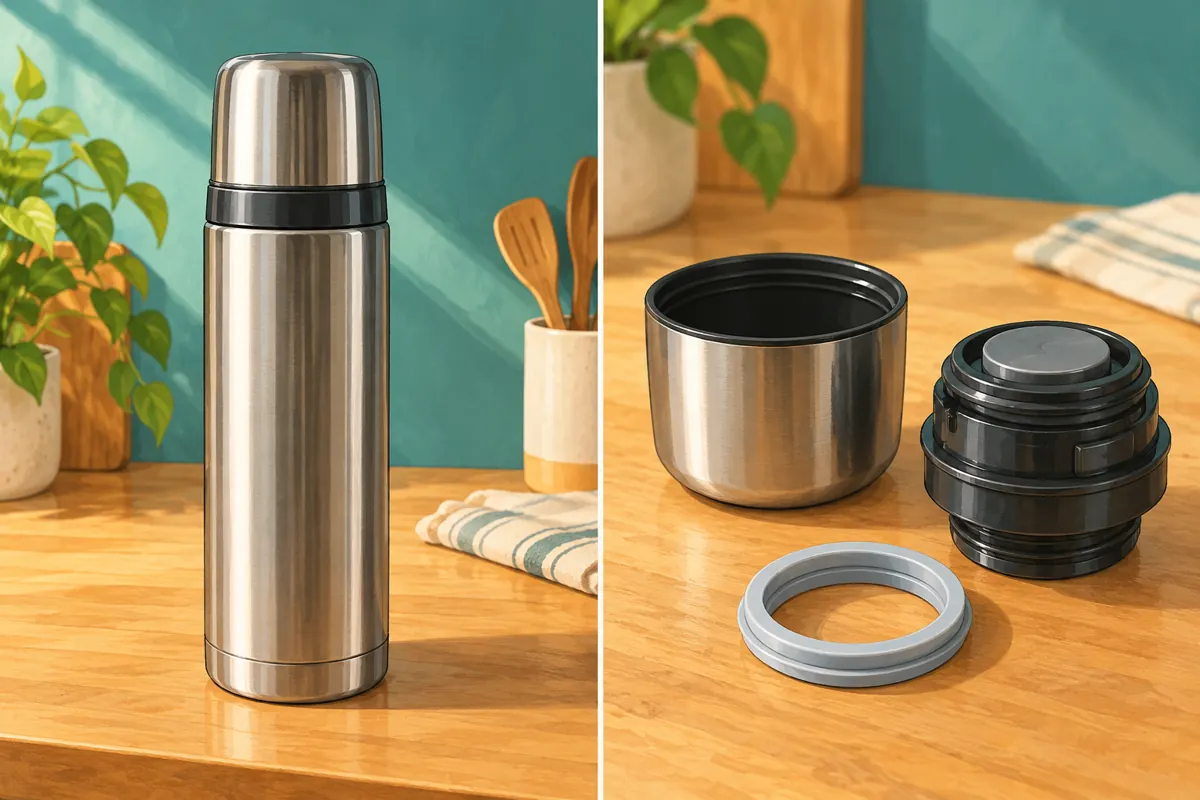
5. Run the thumbnail comparison with a clear record
YouTube’s official A/B testing guidance specifies desktop Studio and advanced-feature access. For an eligible video, open its details, choose A/B Testing under Thumbnail, select Thumbnail only, upload the alternatives, and click Done. Up to three alternatives are supported; two are sufficient for this question. Shorts and private videos are among the excluded formats or settings.
Create a brief record containing the video URL, fixed title, candidate filenames, start date, and person responsible. Describe the candidates in ordinary language, such as whole flask and lid detail. Keep the original image files so the final report cannot become confused with later revisions.
YouTube says tests can take up to two weeks, and changing the title or thumbnail during a test stops it. Agree who can make those edits. If a factual error requires correction, prioritize the correction and record the interruption.
6. Keep promotion and purchased engagement out of the conclusion
A team reviewing bongsmm.com may encounter the exact public listing “YouTube Like ~ Max 500k ~ 100k/days ~ Instant ~ 𝐍𝐎 𝗥𝗘𝗙𝗜𝗟𝗟”. Its name presents a YouTube likes service, but the supplied description is empty. The wording alone does not verify delivery speed, account authenticity, audience location, or suitability for an experiment. It does not describe a thumbnail-testing service.
Do not order artificial engagement to force a clearer test outcome. YouTube prohibits artificially increasing engagement metrics and warns that a hired promoter’s actions can affect the channel. Purchased engagement is not evidence of genuine interest, sales, ad delivery, or Cambodian users. A service order record also cannot establish which thumbnail helped an interested shopper understand the lesson.
For ordinary promotion, share the tutorial where it answers an existing question and where sharing is welcome. Note meaningful campaign activity in the review record. This provides context for later business discussion without pretending that every enquiry came from the thumbnail.
7. Read the result without inventing a business success
YouTube evaluates the experiment using watch time share. Its reported outcomes include Winner, Performed Same, and Inconclusive. Review the result through the video’s Reach analytics and preserve the wording. A winning thumbnail establishes a viewing result within that experiment; it does not establish purchase intent.
In a hypothetical outcome where the lid detail wins, the shop could retain that image and note that the closer view worked better for this demonstration. It should not announce that Cambodian customers prefer lid photographs generally. The test does not justify that audience claim, and another topic may need a different image.
If the outcome is inconclusive, choose the clearest truthful candidate and record that the experiment did not settle the comparison. Do not turn a small apparent difference into a headline. The shop still gains a documented creative decision and reusable photographs.
8. Track customer questions in a separate record
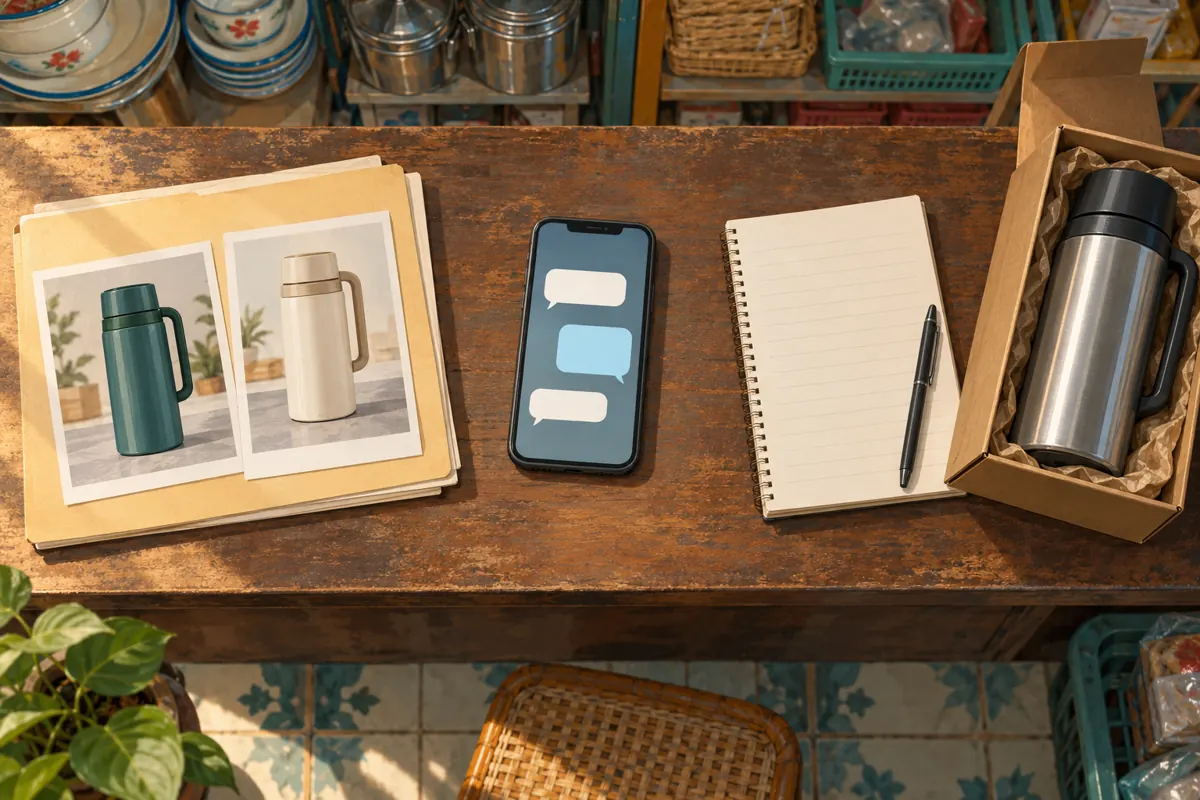
Keep a simple enquiry log alongside the creative record. Useful fields include the question asked, product or model mentioned, information still needed, and next action. Record a confirmed order only when the shop’s normal confirmation process is complete. A request for a seal photograph is an enquiry, not a completed sale.
For example, a hypothetical viewer might ask whether the demonstrated seal fits a flask bought elsewhere. Staff should request the relevant model information and explain that the video covers the pictured product. That exchange can reveal a need for a separate compatibility guide. It does not prove that one thumbnail caused the enquiry.
When appropriate, ask how the person found the demonstration. Treat their answer as customer-reported context. Keep personal contact details out of creative review documents that do not need them, and avoid adding a tracking exercise that slows down a straightforward customer response.
9. Avoid changes that make the lesson impossible to interpret
A common mistake is changing the image, title, opening script, and offer together, then attributing everything to the thumbnail. Another is manually swapping pictures on different days and treating the resulting totals as a controlled comparison. Different circumstances can influence what happens on each day. Such observations may inspire a test, but they deserve cautious wording.
Also avoid selecting an image solely because it appears more dramatic. A close-up can hide the product identity; a whole-product photograph can hide the procedure. Check both against the actual lesson. Do not add a discount badge to a care video unless the offer is relevant, accurate, and maintained.
Finally, avoid retesting indefinitely because the team dislikes an inconclusive outcome. Decide what uncertainty remains. If the remaining question is whether customers can identify their lid, a clearer identification demonstration may be more useful than another decorative thumbnail variation.
10. Turn the decision into a repeatable shop habit
Close the review with a short note: the question tested, the candidates, the reported outcome, the selected image, and the reason for keeping it. Add one practical lesson, such as photographing removable parts during future filming sessions. Keep that lesson specific enough that another staff member can apply it without interpreting a vague instruction to make better thumbnails.
Use the next comparison to answer a new uncertainty. A product introduction might benefit from showing the complete flask, while a care lesson might need a component close-up. Neither becomes a universal rule. The repeatable habit is to match the image to the promise, check that people understand it, test when appropriate, and report only what the evidence supports.
Frequently asked questions
Should a small Cambodian shop wait until it has a large audience?
There is no need to postpone basic thumbnail review. Start by checking whether someone unfamiliar with the video understands its subject. If a platform test does not produce a clear result, keep the clearest accurate image and acknowledge the uncertainty. Do not buy activity to make the report appear more decisive.
Should the thumbnail use Khmer or English?
Choose wording that the intended viewer can understand, consistent with the video’s language and purpose. For this care demonstration, the lid and seal may communicate enough without much text. Keep necessary model identifiers accurate. If comparing visual emphasis, use consistent wording across the candidates rather than changing language at the same time.
Can we test a photograph against an AI-generated product picture?
For a lesson involving specific lid parts, use photographs of the actual demonstrated item. An invented product image may alter the seal, threads, or lid structure and create expectations the video cannot meet. Generated illustrations can explain planning concepts, as they do here, without serving as evidence of a product’s construction.
What if the selected thumbnail attracts compatibility questions?
Review whether the video and enquiry instructions make the model limitation clear. Answer those questions with the information needed to assess compatibility; do not assume interchangeable parts. Repeated genuine questions may justify a separate identification video. That is a useful editorial finding even when it cannot be attributed to a particular thumbnail.
Can a panel likes order confirm that viewers preferred our new thumbnail?
No. A likes service order does not establish which image a viewer encountered or whether anyone understood the lesson. Its delivery record cannot substitute for the platform experiment or a genuine customer enquiry. Evaluate any proposed promotional method against platform rules before considering it, and reject artificial engagement as a testing shortcut.
Explore the current service catalogue, create an account, or ask a specific question through support tickets.
Prepared with AI assistance. Illustrations explain the workflow and do not represent customer results.