22/10/2026 07:36
Does the Voice Say Millimetres? TikTok Text-to-Speech Checks for Cambodian Bead Shops

A bead can look perfect in a close-up while the spoken description gives shoppers the wrong idea. If a video reads a product code as a measurement, skips a decimal, or makes pack quantity sound like bead diameter, an attractive demonstration becomes a confusing sales conversation. For Cambodian craft suppliers serving customers in Khmer and sometimes English, checking the voice deserves its own review. TikTok identifies text-to-speech as one of its accessibility tools, but a generated voice does not verify product facts. This workflow helps a shop choose suitable narration, check what customers actually understand, and decide whether a video is ready for promotion.
1. Start with the question the bead must answer
Choose one buying question before writing narration. A shopper making bracelets might need to know whether a cord passes through the bead. Someone decorating a bag might care about the bead’s outside width. A workshop organiser might mainly need the number of pieces in a pack. These questions require different footage and different spoken explanations, even when they concern the same product.
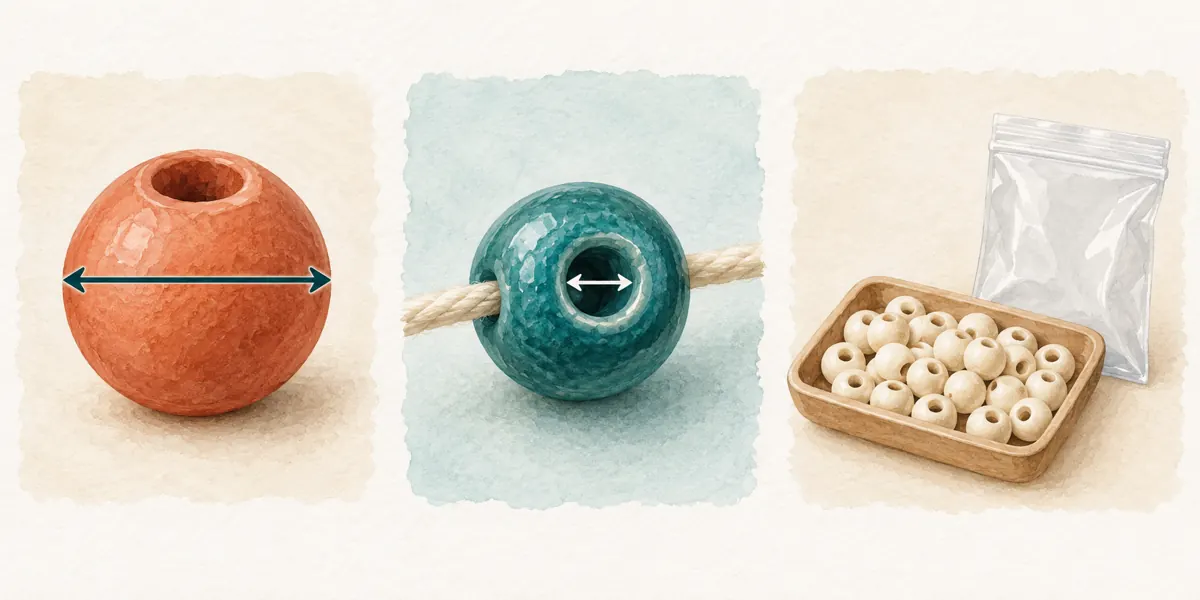
Consider a hypothetical Phnom Penh bead shop filming a round wooden bead. Its draft says, “Eight millimetres, twenty pieces, suitable for cord.” That sentence leaves the important fit question unresolved: eight millimetres describes which part? A clearer opening would identify the outside diameter and then show the hole separately. Set the intended outcome as “the viewer knows which measurement to ask for,” rather than “the clip sounds polished.”
2. Separate diameter, opening and quantity before recording
Prepare a small product note with separate entries for outside size, hole opening, pack quantity and the cord used in the demonstration. Include only information the shop has checked. If the supplier provides a nominal dimension but the shop has not verified the opening, keep that distinction visible in the working note. Do not turn an approximate catalogue description into a precise spoken guarantee.
Film each fact with its corresponding object. Show the outside width while discussing diameter, move closer to the opening when discussing threading, and show the sale pack when discussing quantity. A loose tray used for styling should not silently stand in for the contents of a purchased pack. If hole size varies between samples, demonstrate that uncertainty honestly and invite a fit check with the customer’s actual cord.
3. Decide whether synthetic speech suits the language
TikTok’s official accessibility information includes text-to-speech functionality. That establishes the feature’s purpose, but it does not establish that every voice will pronounce your product terminology correctly. Check the options actually available in your editor and test the language your customers need. Do not assume that Khmer pronunciation or a particular voice is available simply because another creator uses synthetic narration.
For a primarily Khmer-speaking audience, ask a fluent staff member to judge the result. If the voice cannot communicate the measurement naturally, record a human Khmer voiceover instead. English narration can be useful for an English-language product explanation, but it should be a deliberate audience choice. Avoid changing the entire message into English merely to accommodate a convenient voice. The decision should follow comprehension, not the novelty of the effect.
4. Write numbers as spoken instructions
Draft the spoken sentence separately from shorthand used on stock labels. Product notes such as “8 mm / 20 pcs” can be efficient for staff, yet they leave a voice engine to interpret abbreviations and punctuation. For a hypothetical English-language example, write, “The bead measures eight millimetres across the outside. This pack contains twenty beads.” Use your verified figures; these illustrative numbers are not specifications for a real listing.
Keep one measurement in each sentence and name the thing being measured. Treat decimals, ranges, model codes and mixed-language terms as items requiring a listening check. A product code should remain a product code, with its role explained. Do not rewrite the visible product name into strange phonetic spelling just to force pronunciation. If a natural sentence still sounds wrong, use recorded speech or remove unnecessary spoken detail while retaining an accurate visible reference.
5. Test a short passage before building the full video
Use a short draft containing the hardest words: the measurement, material name and any essential product code. Where text-to-speech is available in your TikTok editor, apply it to that passage and preview the result. Listen before adding music or completing the remaining scenes. This makes a pronunciation problem inexpensive to fix and prevents a finished edit from becoming dependent on an unsuitable voice.
Once the wording works, build the demonstration around complete spoken thoughts. Hold the outside-size shot while that explanation plays, then move to the opening. Leave enough time for the customer to see the action being described. If the voice finishes after the video has switched to another product, adjust the edit or shorten the sentence. Avoid squeezing more information into the clip by making the narration difficult to follow.
6. Run separate listening and silent-viewing checks
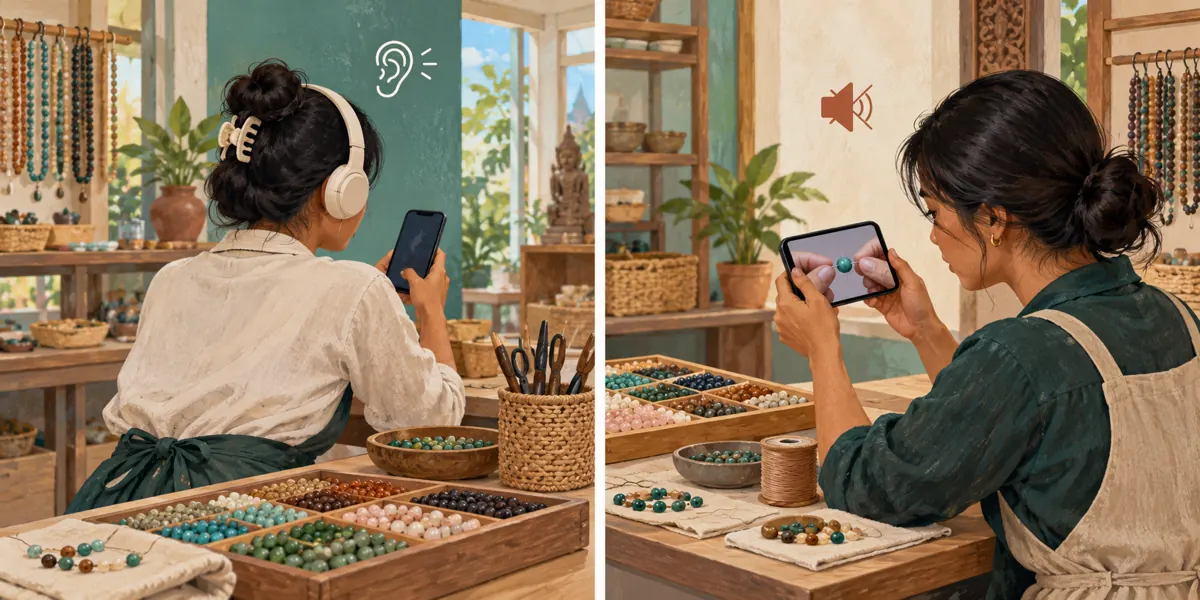
Ask a colleague who did not write the script to listen without watching. Have them explain which dimension they heard, what the pack contains and what remains uncertain. Do not show them the product note first. A reviewer who already knows the intended answer may unconsciously repair unclear speech. Record their interpretation in ordinary words, then compare it with the verified product facts.
Next, watch with sound off. The essential distinction between outside size and hole opening should remain understandable through the demonstration and readable labels. Keep labels clear of the product detail they explain. Finally, review sound and picture together on a phone at normal viewing size. This catches conflicts that either separate test can miss, such as a sentence about the opening playing over a shot of the full pack.
7. Keep the demonstration narrower than the promise
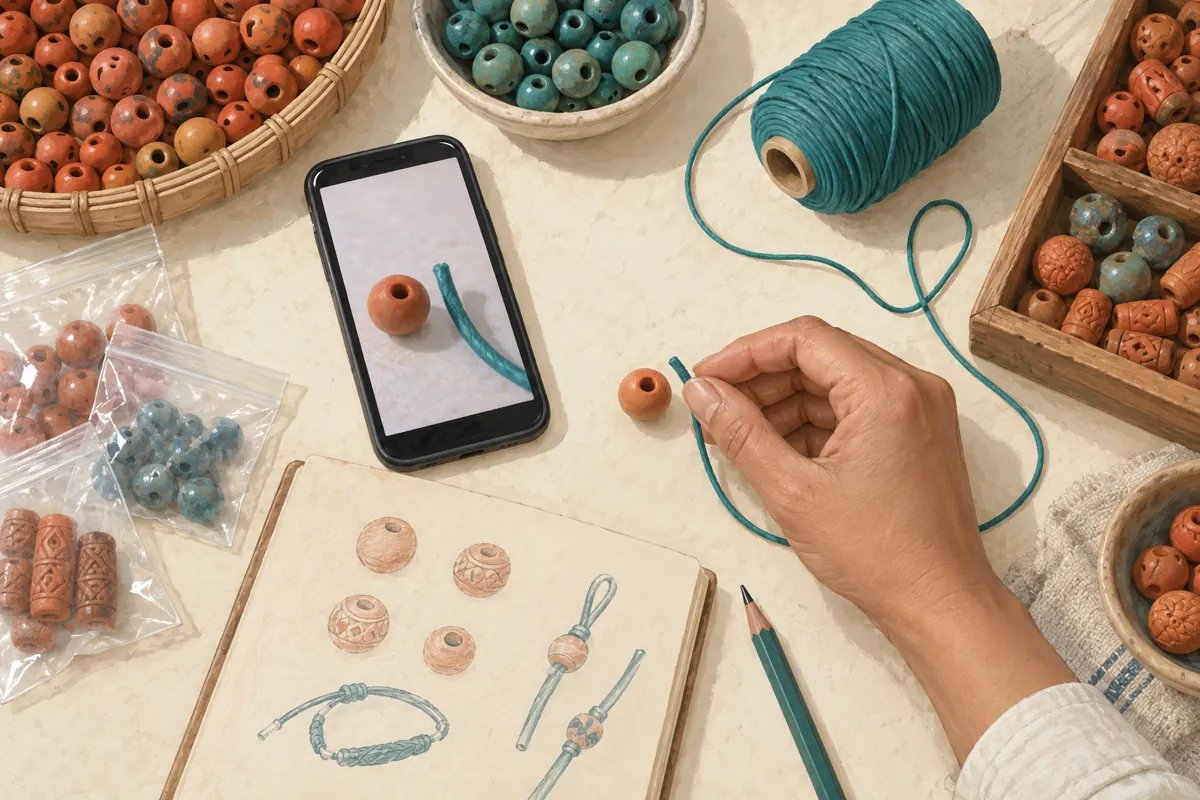
A successful threading demonstration proves that the particular cord passed through the particular bead shown. It does not establish that every cord sold under the same nominal size will behave identically. The cord’s end condition, stiffness and construction can affect the practical demonstration. Show the materials used and describe the result without extending it into a universal compatibility claim.
In a hypothetical Siem Reap craft shop, a customer might ask whether a doubled cord will fit after seeing a single strand pass through. The useful next step is to request the intended arrangement and inspect a sample, rather than repeat the outside diameter. Plan the closing instruction around that need: ask shoppers to provide the bead reference, cord information and whether they want one strand or several through the opening.
8. Make the SMM-panel decision after the clarity check
For readers comparing options on bongsmm.com, distinguish the desired business outcome from a catalogue label. One supplied public service name is “TikTok - Story Likes ~ 20k ~ 10k/days ~ INSTANT”. Its name identifies a Story-like offering; the supplied brief contains no explanatory description. It does not establish a narration service, a measurement review, Cambodian audience delivery or suitability for an ordinary product video. Treat the quantity and timing language as unverified listing wording.
TikTok’s official guidance prohibits services that artificially increase engagement. Decline options that depend on such activity and direct the effort toward clearer content and genuine customer communication. Purchased engagement cannot establish genuine interest, sales, ad delivery or Cambodian users. Even a completed panel order would not answer whether viewers understood the bead opening. Keep any historical service records separate from customer enquiries and product-fit evidence when reviewing the video.
9. Fix common mistakes before sharing the demonstration
The first common mistake is reviewing only the written script. A correct sentence can still be spoken unclearly, so approve the audible version. The second is placing several measurements over a single close-up without identifying their objects. The third is letting background audio obscure a quiet decimal or unit. Test the final mix through an ordinary phone speaker, not only headphones in a quiet room.
Another mistake is adding an accurate visible label while leaving contradictory narration in place. Resolve the disagreement instead of expecting shoppers to choose the correct version. Also check that a reused script does not describe an earlier pack quantity or a different bead finish. If a material error is found after publication, stop sharing that version, explain the correction clearly, and give staff one approved reference to use in subsequent conversations.
10. Review understanding through the questions customers ask
After sharing the approved video, note the substance of genuine enquiries. Are people identifying the bead reference? Are they asking about the opening instead of assuming the outside diameter determines fit? Are they sending the cord information needed for an answer? These observations help identify the next explanation to improve. They do not require you to interpret every like or view as purchase intent.
Keep a brief review record containing the video reference, approved spoken wording, product sample used and any unresolved question. If several customers independently confuse pack quantity with size, revise that distinction in the next demonstration. If enquiries are scarce, avoid declaring the narration ineffective from that fact alone; distribution, stock relevance and customer timing may also matter. Make the next change specific enough that staff can explain what they are trying to clarify.
Frequently asked questions
Should a Cambodian bead shop use English text-to-speech for a Khmer-speaking audience?
Only when English genuinely serves the intended viewers. A convenient voice is not a good reason to make essential product information harder to understand. Test comprehension with a fluent Khmer-speaking reviewer. If the available synthetic voice cannot deliver the intended Khmer explanation clearly, record a human voiceover and retain readable product labels.
Can I leave “mm” in the text if the voice reads it correctly?
Yes, provided the final playback clearly communicates millimetres and identifies what is measured. Full words are a useful drafting technique, not an absolute requirement. Check the exact finished sentence, including nearby numbers and product codes. Recheck after edits instead of assuming that an earlier successful test approves every later version.
What if I know the bead diameter but not its hole size?
State only the verified outside measurement. You can demonstrate a particular cord passing through a sample while making the limits clear, but do not invent a hole measurement from appearance. Offer a sample check or ask the customer for the intended cord arrangement before discussing compatibility.
Does text-to-speech replace captions or other visible information?
No. Spoken narration and visible information serve different viewing needs. A customer watching silently still needs to understand the key distinction. Keep the essential product fact visible and readable, while ensuring that the spoken version agrees with it. Review any automatically produced captions for measurement errors before relying on them.
Can likes show that the measurement explanation worked?
Likes do not tell you which measurement someone understood. Purchased likes provide no evidence of genuine customer understanding or local demand. A more useful check is whether an independent reviewer can repeat the correct meaning and whether genuine enquiries contain the product and cord details needed for a practical answer.
Explore the current service catalogue, create an account, or ask a specific question through support tickets.
- TikTok Newsroom: Celebrating Global Accessibility Awareness: Building an Accessible and Inclusive TikTok
- TikTok Community Guidelines: Integrity and Authenticity
Prepared with AI assistance. Illustrations explain the workflow and do not represent customer results.