19/10/2026 22:29
Can Customers Ask the Channel Directly? Telegram Quote Enquiries for Cambodian Apron Workshops

A catalogue photograph can show an apron’s shape and colour, but a café owner may still need to ask about quantities, pockets, embroidery and collection dates. If the next step is unclear, a useful product post leaves the customer searching for someone to contact. For Cambodian custom apron workshops, Telegram channel direct messages offer a way to connect the catalogue with a private enquiry. This guide explains how to prepare that route, rehearse it and turn a conversation into a reviewable quote request. It also explains why purchasing channel engagement cannot establish that anyone needs aprons or intends to order.
1. Define the question the catalogue cannot answer
Start with a specific customer decision. A workshop selling ready-made aprons may only need to confirm colour and availability. A workshop sewing to order must understand the intended use before discussing a final price. Write down the smallest useful outcome of the first conversation: identifying the style, approximate quantity and required date. This gives the channel a practical purpose beyond displaying attractive photographs.
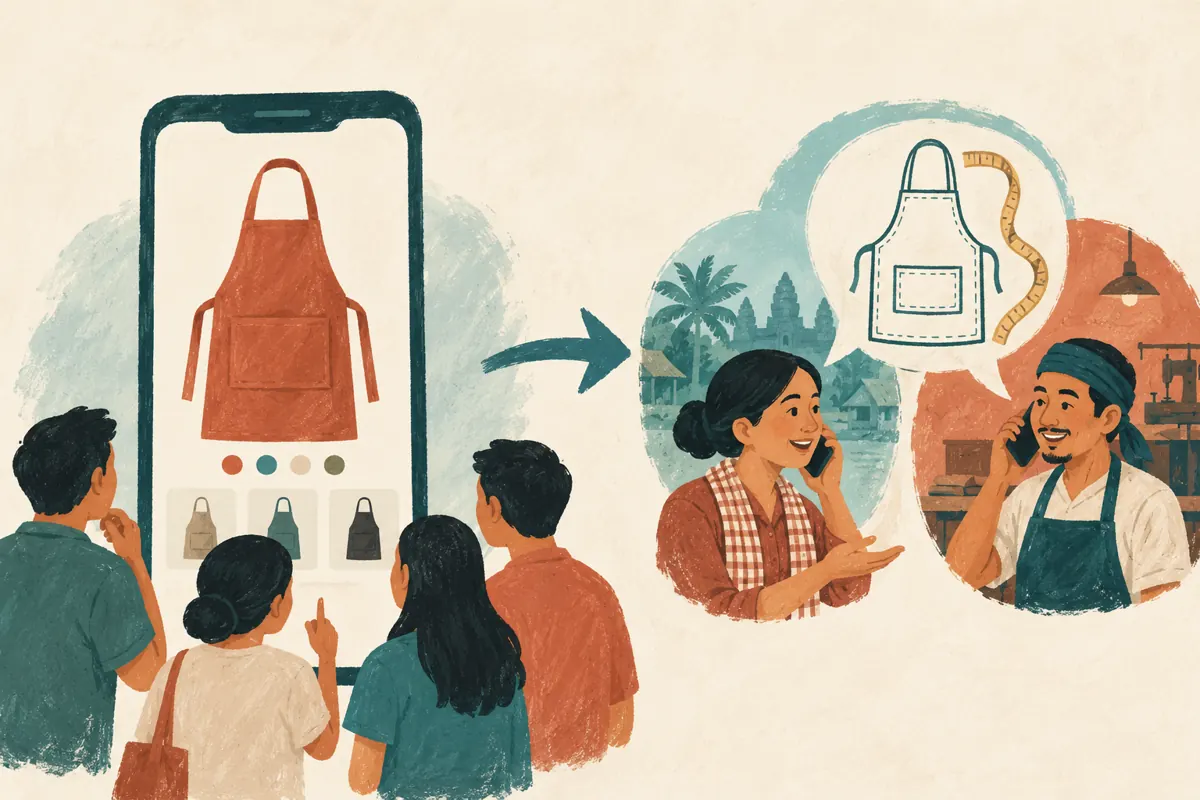
Consider a hypothetical Phnom Penh workshop promoting adjustable café aprons. Its post shows the pocket layout, but a café manager needs a shorter version for some staff and wants to know whether embroidery is possible. The desired next action is a question about that requirement. A reaction to the photograph does not communicate it. Build the promotion around helping the manager begin that conversation without having to guess which personal account belongs to the workshop.
2. Understand the channel messaging feature
Telegram’s official announcement explains that channels can enable direct messages so subscribers can privately contact owners and administrators. These conversations appear separately from the owner’s personal chats. The documented setup route is Channel Settings > Direct Messages; subscribers use the message bubble in the channel’s bottom bar. Telegram also allows a fee for each direct message. Check the actual settings and customer experience in the app before writing instructions.
Use this feature when the business wants enquiries to begin at its channel identity. Decide who will watch that inbox and who can answer production questions. A new contact route needs a responsible person, even if only one owner runs the workshop. Private enquiries should contain the details needed for the job; they should not become an excuse to collect unrelated personal information or request sensitive documents.
3. Decide whether the inbox is ready for promotion
Before enabling a prominent invitation to message, check production capacity and staff availability. Someone should be able to explain which fabrics are available, which customisations require checking and when a quote can be prepared. If the person answering cannot confirm those details, agree on an internal escalation route. Otherwise the workshop may attract questions that remain unresolved while customers assume their requirements are being handled.
For ordinary sales enquiries, avoiding an optional message fee can reduce an unnecessary step for customers. If the business deliberately uses a fee, explain it before inviting people to write and test how it appears. Do not present payment to send a message as an apron deposit or order confirmation. If nobody can monitor another inbox reliably, keep the existing working contact route prominent until the team is ready.
4. Give each promoted apron a clear reference
A message saying “How much is this?” is difficult to answer when several similar aprons appear in the channel. Give the promoted design a short workshop reference and place it beside the photograph. Identify what the example includes: apron shape, pocket arrangement, fastening style and whether decoration is shown. Explain which details can vary rather than implying every pictured option is available immediately.
In a hypothetical post, the workshop could label the sample “Cafe Bib A” and invite readers to send that reference, their approximate quantity and required date through the channel’s message button. Add the town or province when delivery feasibility affects the quote. Keep this invitation close to the product explanation. Customers should not need to inspect several older posts to discover how to ask about the item they are viewing.
5. Ask for enough information without creating a form barrier
Treat the first message as the beginning of a conversation. Ask for the product reference, quantity, intended use and deadline first. After understanding the request, ask about dimensions, fabric preference and decoration. This sequence avoids demanding a complete technical specification from someone who may not yet know the difference between an adjustable neck strap and a fixed design.
For a hypothetical café enquiry, a useful reply would be: “Thanks for asking about Cafe Bib A. How many aprons do you need, and when would you like them ready? Will you collect in Phnom Penh or need delivery elsewhere?” Later, clarify whether the date means dispatch, arrival or collection. If measurements are necessary, explain which edges to measure and the unit to use. Do not rely on a photograph alone to establish size.
6. Turn the conversation into an explicit quote summary
Once the basic requirements are known, send a concise written summary for the customer to check. Include the design reference, quantity, dimensions or size arrangement, selected fabric, decoration request and fulfilment location. Mark anything still awaiting confirmation. For customers who prefer discussing details in Khmer, make sure the person responding can explain the production choices clearly rather than relying on unexplained English garment terms.
Separate a requested date from a date the workshop has accepted. Likewise, distinguish a preliminary estimate from a final quote and a quote from an approved order. A hypothetical summary might say that the fabric colour is selected but embroidery feasibility still needs review. Ask the customer to correct the summary before proceeding. This creates a shared specification and reduces the chance that a friendly conversation is mistaken for a production commitment.
7. Rehearse the journey from a customer’s phone
Ask a colleague to act as a customer using an ordinary subscriber account. Have them open the intended product post, find the messaging route and submit a clearly labelled test enquiry. Check whether they encounter any unexpected fee and whether the enquiry reaches the person responsible for answering. Reply, then confirm the colleague can identify the response and continue the conversation. Remove unnecessary test material afterwards.
Test understanding as well as button visibility. Can the colleague identify which apron to ask about? Do they know whether the photograph shows a sample or available stock? Can they explain what information the workshop requested? If any step is unclear, revise that part of the post and repeat the affected step. A successful rehearsal demonstrates that the route works in the tested circumstances; it does not predict how many customers will use it.
8. Keep SMM panel services separate from enquiry handling
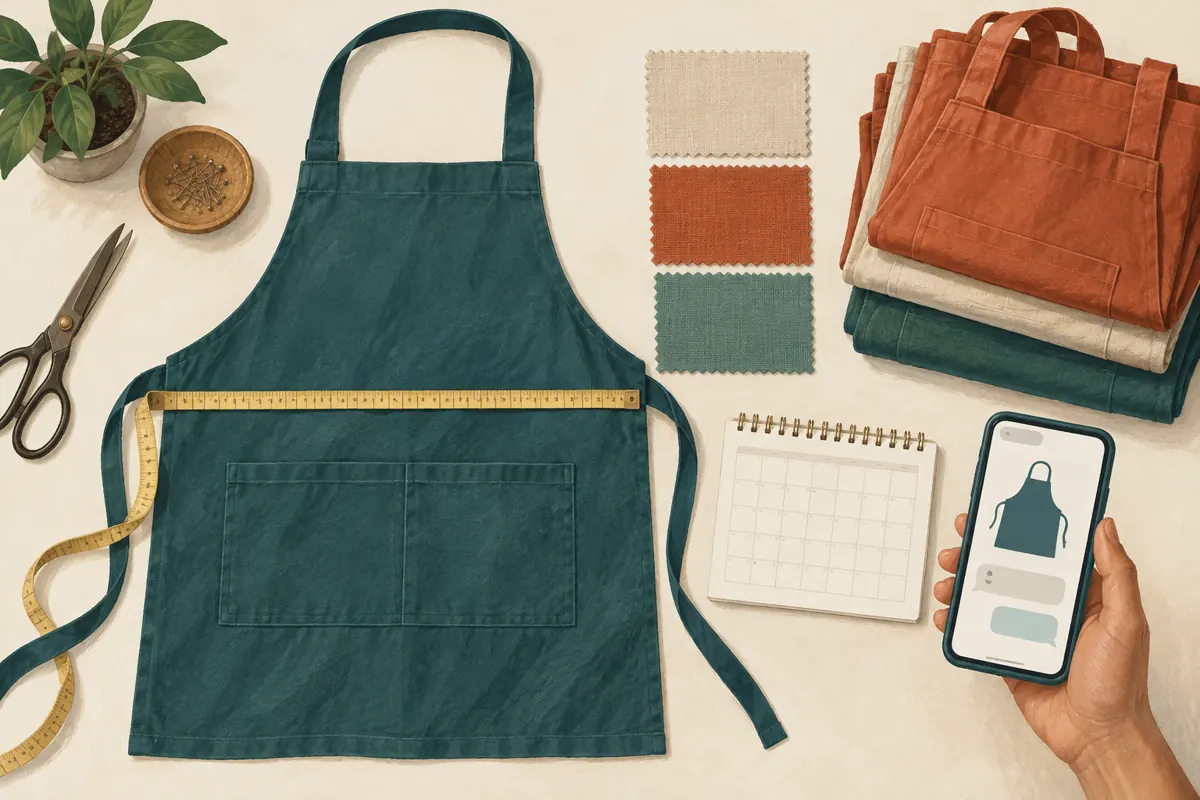
The supplied bongsmm.com catalogue includes the exact public service name “Reactions + view posts | ☃️”, under a Telegram reactions-and-views category. Its description is empty. That supports identifying the listed service type, but it does not establish delivery conditions, audience location, account quality or business outcomes. Nothing supplied documents a service that answers channel enquiries or qualifies apron buyers.
If reviewing that listing, first ask what business problem the workshop is trying to solve. Missing product information, an unattended inbox and unclear quoting procedures require operational changes. Purchased engagement is not evidence of genuine interest, sales, ad delivery or Cambodian users. Do not use reaction or view counts as customer proof, and do not imply that a panel listing represents an official Telegram affiliation.
A sensible decision may be to skip a panel purchase and improve the catalogue or response process. If any service is considered, review its current terms and applicable platform rules independently. Keep its order record separate from customer conversations and sales records.
9. Review enquiries for friction, not just volume
After the revised post has been available for a practical review period, examine what customers still struggle to explain. Record whether an enquiry identifies the apron, provides a quantity and establishes a usable deadline. Note recurring missing information without copying unnecessary customer details into a general marketing spreadsheet. These observations can guide the next edit to the catalogue and the questions staff ask.
For example, repeated questions about adjustable straps suggest that the product explanation needs a clearer photograph or sentence. Repeated confusion about delivery dates suggests that the quote conversation needs an earlier timing check. Count requests for quotes separately from accepted orders, and keep cancelled or unresolved enquiries visible in the review. If other promotions or panel services ran during the same period, record that context rather than attributing every conversation to a single change.
10. Avoid the shortcuts that create false expectations
One common mistake is inviting people to “message to order” when the workshop must first check fabric and capacity. Use “message for a quote” when that is the real next step. Another mistake is treating every requested customisation as available because it appears in a reference image. Confirm feasibility before presenting a choice as settled, especially where decoration, unusual dimensions or a tight deadline affects production.
Avoid scattering several competing contact instructions through the same post. Choose one primary enquiry route and provide a clearly explained alternative only when useful. Do not ask customers to repeat the entire specification whenever another staff member takes over. Finally, never publish private enquiry screenshots as proof of demand without permission. Useful promotion makes the next question easier to ask; dependable quoting gives that question a clear, accurate answer.

Frequently asked questions
Should we open channel direct messages if customers already contact the owner?
Only if the additional route solves a real problem and someone can manage it. It may help customers who recognise the workshop’s channel but do not know the owner’s account. Start with one promoted product and a tested response process. Keep existing customer conversations organised rather than forcing every ongoing quote to move immediately.
Does a customer’s direct message reserve fabric or a production slot?
No business commitment should be inferred from the enquiry alone. Explain your own reservation conditions and confirm them explicitly when they are met. Until then, describe fabric and timing as subject to checking where appropriate. A clear written summary should show what the customer requested and what the workshop has actually agreed to provide.
What should we do when the customer sends only an apron photograph?
Acknowledge the image and ask which feature matters: shape, fabric, pocket placement or decoration. Then request quantity and timing. Treat an external reference as inspiration for discussion, not proof that the workshop can reproduce every detail. Confirm the final specification with an approved sample or clear written description before accepting the work.
Can more purchased reactions show that the new enquiry route is working?
No. Reactions do not show that someone found the message button, supplied usable requirements or accepted a quote. Evaluate the route through the rehearsal and actual enquiry records. Even a genuine question is only one step toward a possible order; keep each stage distinct when assessing promotion.
What if customers still cannot find the messaging option?
Recheck the channel setting and reproduce the problem on the customer’s device or app version where practical. Use the official guidance as the starting point, but write instructions that match the interface you actually tested. Offer an established contact alternative while investigating so customers are not left with an unusable invitation.
Explore the current service catalogue, create an account, or ask a specific question through support tickets.
Prepared with AI assistance. Illustrations explain the workflow and do not represent customer results.