21/10/2026 18:58
Will the Saucer Fit Too? TikTok Video Replies for Cambodian Plant-Stand Shops

A plant stand can look suitable in a short video while leaving an important question unanswered: does it hold the pot alone, or the pot with its water-catching saucer? For a Cambodian shop serving balcony gardeners, cafés or household buyers, that distinction can change the recommendation. A useful response should show the relevant parts together and explain what the customer still needs to check. This article follows a hypothetical Phnom Penh plant-stand shop turning that question into a TikTok video reply. The aim is a clearer buying conversation, with a practical boundary between helpful promotion and engagement numbers that cannot establish product suitability.
1. Choose a question that needs a visible answer
Start with the uncertainty behind the comment. In this hypothetical example, a viewer asks whether a saucer can remain underneath a pot on the advertised stand. A quick yes could be misleading because the answer depends on the stand design, the saucer shape and the exact combination shown. Video is useful when the customer needs to see a contact point, clearance or movement that words alone would leave ambiguous.
Use a text reply for a straightforward, verified fact such as the shop’s pickup hours. Move an individual delivery address or order problem into the shop’s established private contact channel. Reserve a video reply for a question whose answer will help other viewers too. This selection rule keeps the shop from spending its filming time on details that will become outdated before the next customer sees them.
2. Understand what a TikTok video reply creates
TikTok’s official video-reply tutorial describes selecting a comment on your video, using the camera icon beside the comment field, recording a response and attaching the comment as a sticker. It also explains that the response appears in the comments and as a new video on the creator’s page. Treat it as a separate public explanation that must make sense beyond the original conversation.
That tutorial dates from 2020, so use it as a description of the feature rather than a promise about every current screen. Check the controls available in your app. If the video-reply option is absent, publish a standalone answer with the question restated in your own words and leave an appropriate text response on the original comment. Do not fabricate a comment sticker or pretend the fallback is a linked reply.
3. Verify the physical answer before recording
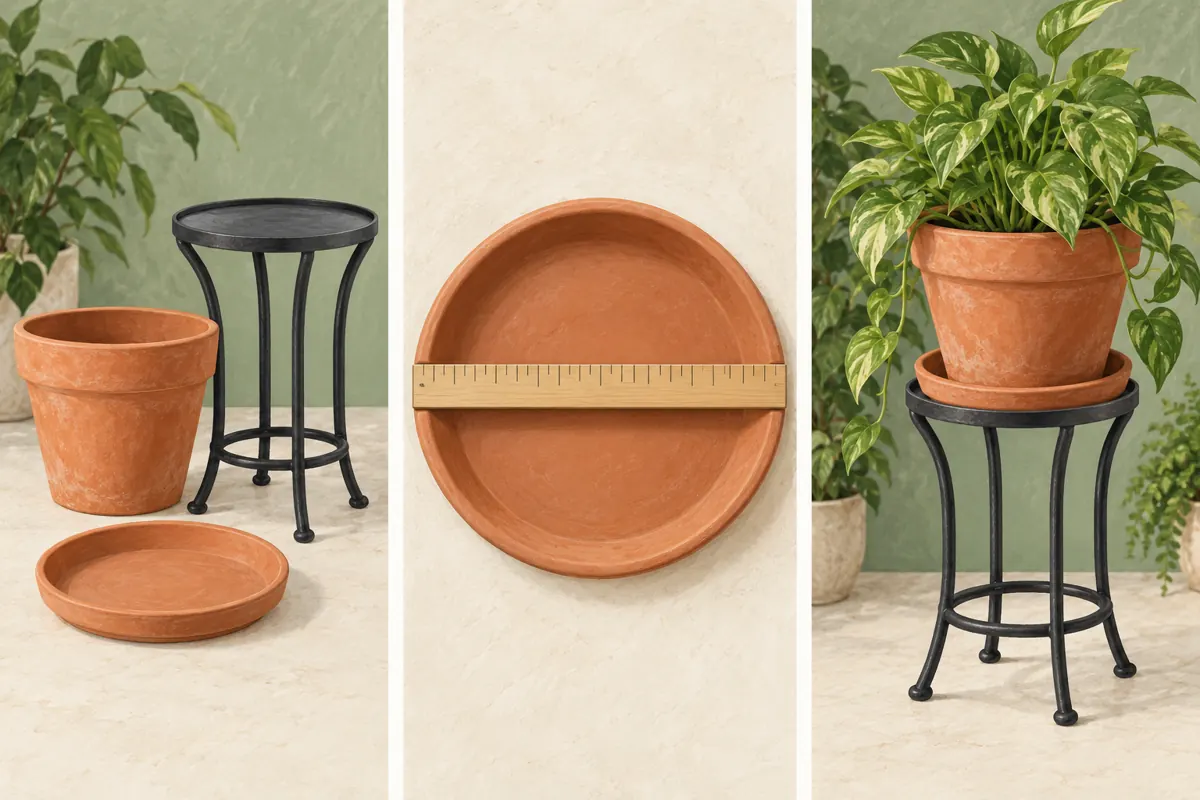
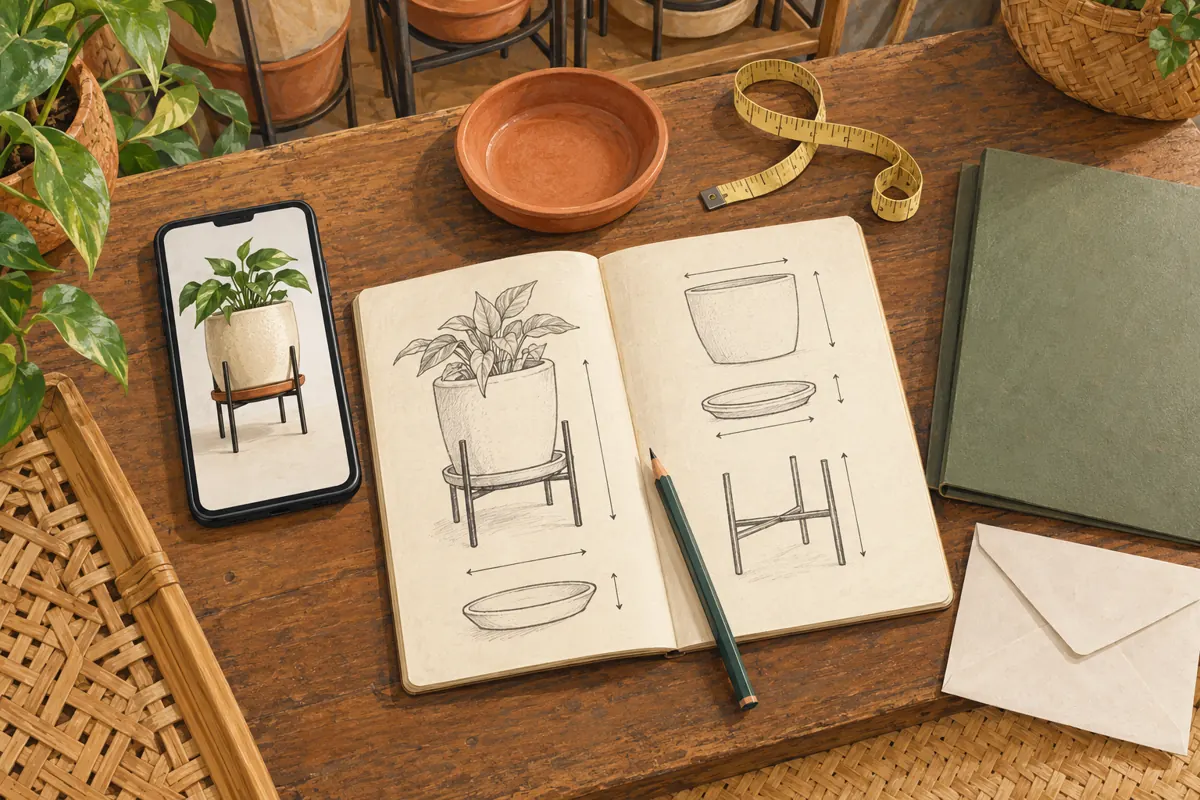
Put the actual stand, pot and saucer together before writing the script. Identify whether the stand supports a flat base, surrounds the pot with a ring, or uses another arrangement. Check the relevant dimensions for that model. The saucer’s outside width may matter, but so may its underside, raised rim and the position of the stand’s supports. A single diameter is not a universal compatibility test.
For the hypothetical shop, a staff member might discover that the bare pot fits one ring-style stand while its wider saucer does not sit properly. The reply should explain that specific result without generalising to every stand. Do not turn a brief demonstration into an unsupported load-capacity claim. Use documented product limits where available, and leave uncertain combinations unconfirmed until someone competent has checked them.
4. Build the answer around three clear shots
Open with all three objects visible: stand, pot and saucer. Name the model or shop reference that customers can use later. Then show the detail that resolves the question. For a flat-platform design, this could be the saucer’s outside width and how its base rests on the platform. Finish with the checked arrangement assembled, making clear which components are included in the offer and which are demonstration props.
Keep the measuring shot honest. When showing a diameter, place a straight ruler through the centre from one outside edge to the other; wrapping a tape around the rim shows a different measurement. Use a second angle if the contact surface disappears behind the pot. Let the relevant shot remain visible long enough to understand it, and avoid editing away the exact moment that reveals whether the pieces seat correctly.

5. Make the answer usable for Cambodian customers
Use the language your customers normally use with the shop. A Khmer-speaking presenter can explain the physical distinction naturally while keeping a genuine model code unchanged. If English product terms appear on packaging, connect them to the object on screen instead of assuming every viewer understands them. Have another staff member check that the spoken explanation and any captions describe the same measurement and component.
A hypothetical script, translated into English for this article, could say: This is the flat-top stand from our earlier video. Here is the pot, and this is its separate saucer. We checked this combination together. For your own pot, please send the saucer’s outside width and a clear side photo so we can review the fit. Add actual verified dimensions when filming; never borrow figures from this illustration or guess from appearance.
6. Review the comment and the commercial context
Read the full comment before putting it into a video. A useful product question may also contain a phone number, an address or details about a private order. If displaying it would expose unnecessary personal information, make a standalone explanation without reproducing the identifying material. Do not convert a customer’s question into a testimonial: asking whether something fits does not mean the person bought it or recommends the shop.
A helpful answer can still promote the shop’s products. TikTok’s official guidance requires the content disclosure setting for posts promoting a brand, product or service, including the creator’s own business. Its guidance distinguishes own-business promotion from paid partnerships. Review the applicable disclosure while preparing the post, and check that the question sticker, captions and other visible elements do not cover the support point being demonstrated.
7. Check both ways a viewer may encounter the answer
Before wider sharing, review the published reply from the original discussion and from the shop’s profile. Confirm that it answers the intended question and identifies the correct stand. Someone arriving at the new video alone should understand what is being compared. If the original post featured several designs, avoid an opening such as this one fits without showing which design this one means.
Ask a colleague who did not film the clip to explain what a buyer should do next. If they cannot distinguish the pot measurement from the saucer measurement, revise the explanation. Also check whether the arrangement shown matches current stock. A similar-looking replacement model may have different supports. Keep a short internal note linking the original post, the reply and the product reference so later staff can identify the relevant demonstration.
8. Give SMM-panel requests a separate decision gate
For bongsmm.com readers, a catalogue entry should never replace the question of whether a proposed service is appropriate. The supplied catalogue includes the exact title Tiktok Reposts ~ Max 5k ~ 5k/day ~ Instant ~ 𝐍𝐎 𝗥𝗘𝗙𝗜𝗟𝗟. It is labelled as a repost service, but its description is empty. That provides no additional evidence about delivery methods, audience location, account authenticity or suitability for this shop.
TikTok’s Community Guidelines prohibit services that artificially boost engagement or manipulate its recommendation system. Do not assume a panel listing makes a method platform-approved, and do not proceed with artificial engagement as part of this workflow. Purchased engagement is not evidence of genuine interest, sales, ad delivery or Cambodian users. Keep any existing panel records separate from customer-enquiry records; a reported service outcome cannot establish that the video helped someone choose a stand.
9. Turn the response into a useful fit enquiry
End with one manageable next step. Ask for the product reference, the relevant measurement and a clear photo through an established contact route. Explain what the shop can confirm from those details and when a physical check is still needed. For a customer outside Phnom Penh, establish the product match before discussing the delivery arrangement. There is little value in quoting transport for a stand that has not been identified correctly.
Record what the enquiry actually contains. A viewer saying nice stand is different from someone providing a saucer measurement, and both differ from a confirmed order. A useful review note might say that the reply prompted a question about the saucer’s underside. That is an observed information gap, not a conversion claim. Use such gaps to improve the next explanation without assuming the video caused every later message.
10. Avoid shortcuts that weaken the explanation
The most common shortcut is answering a broad fit question with one attractive assembled shot. That hides the dimensions and contact surfaces the customer needs to understand. Another is changing models halfway through the recording because a different stand looks better on camera. Keep the product consistent, and state clearly when you deliberately compare two designs. Decorative plants and props should not obscure the parts doing the supporting.
Do not invite staff or friends to pose as customers so the shop can manufacture demand around a reply. If a question comes from the workshop team, present it as a shop explanation. Avoid publishing several near-identical answers merely to fill a schedule. When a genuine follow-up introduces a different issue, such as removing the saucer for cleaning, make that new question the focus and verify the procedure before demonstrating it.
Frequently asked questions
Should every customer question receive a video reply?
No. Choose video when seeing the object or action materially improves the answer. A short text response is usually more efficient for a simple verified fact. Individual order problems belong in a suitable private channel. The selection should depend on the customer’s uncertainty, not on a target number of videos.
What if the original comment only says will this fit?
Ask what the customer means before making a specific recommendation. They may be asking about the pot, the saucer, the available floor space or the stand’s intended load. You can explain the general checking process publicly, but do not imply that an unknown combination has been approved.
Can we use the video when the demonstrated model sells out?
It may remain useful as an explanation of a checking method, provided viewers are not led to believe that the exact model is still available. Review the offer context and stop circulating it as a current stock recommendation. Check any replacement model independently; visual similarity does not establish identical fit.
Does a repost service mean the reply will reach Cambodian buyers?
No. The supplied repost listing has no description establishing Cambodian delivery or buyer intent. Its name alone cannot substantiate either claim. More fundamentally, artificial engagement conflicts with TikTok’s stated rules. Use actual customer conversations to understand whether people can identify the product and provide the information needed for a fit check.
How should a small shop judge whether the answer was useful?
Review the content of subsequent questions. Are customers naming the correct model, distinguishing the pot from its saucer and sending the requested information? Note unresolved confusion and improve the explanation. Keep that qualitative assessment separate from sales records, and avoid claiming causation when a customer’s route to purchase is unknown.
Explore the current service catalogue, create an account, or ask a specific question through support tickets.
- TikTok Newsroom: Product tutorial — Reply to comments with video
- TikTok Help Center: Promoting a brand, product, or service
- TikTok Community Guidelines
- TikTok Community Guidelines: Integrity and Authenticity
Prepared with AI assistance. Illustrations explain the workflow and do not represent customer results.