21/10/2026 04:13
Who Approves the Lunch Offer? Telegram Suggested Posts for Cambodian Caterers
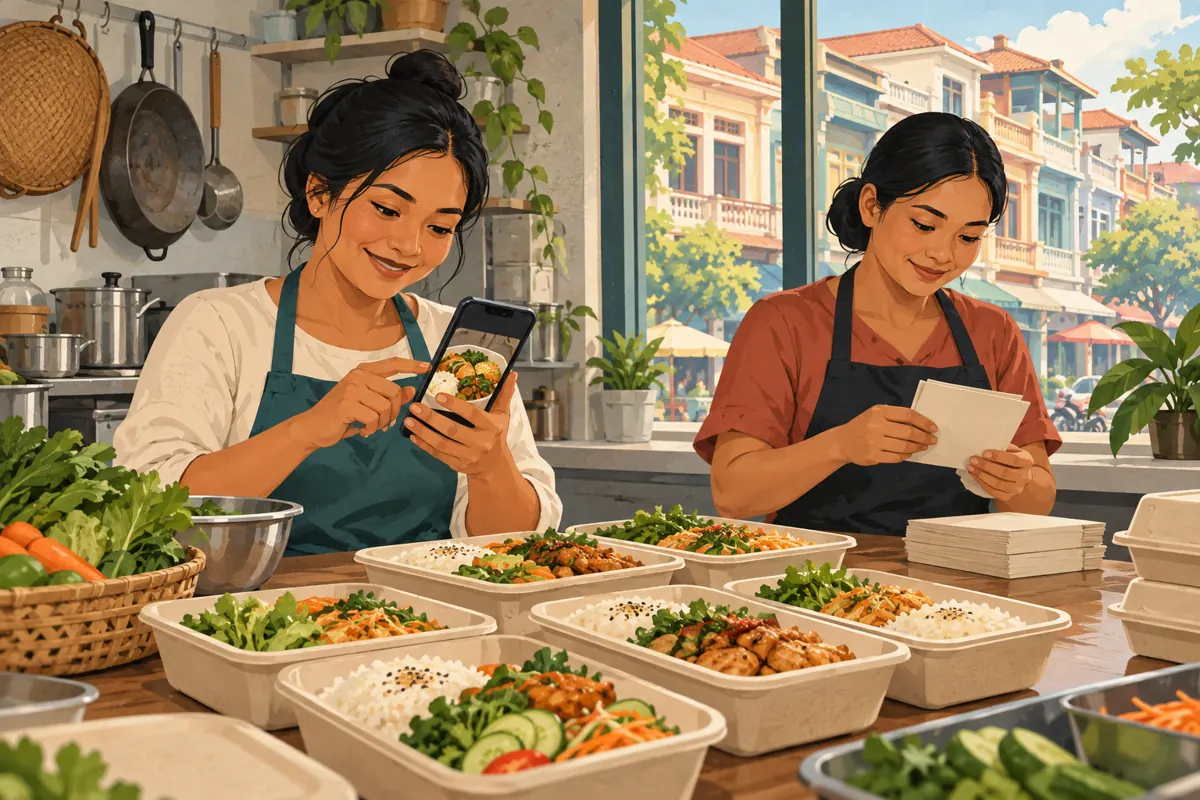
A lunch promotion can look attractive and still create the wrong enquiries. A photograph might show a drink that costs extra, a caption might omit the delivery area, or a partner might publish after the kitchen stops accepting orders. For Cambodian caterers promoting office lunches through another Telegram channel, the useful question is therefore specific: who approves the exact offer customers will see? Telegram suggested posts provide a way to submit content for a channel’s consideration. This guide explains how to prepare that submission, handle revisions and evaluate the result, while keeping any SMM-panel activity separate from evidence of actual catering demand.
1. Decide what the partner post should accomplish
Start with one customer action that your team can handle. For an office-lunch caterer, that might be an enquiry containing the delivery date, office location and number of meals. Asking readers to follow a channel, browse a menu, request a quotation and place an order simultaneously makes the offer harder to use. Choose the next step according to how much information the kitchen needs before making a commitment.
Consider a hypothetical Phnom Penh caterer preparing a weekday lunch offer for offices within its existing delivery route. The aim is to receive suitable group-lunch enquiries before the preparation deadline. The partner post should help readers recognise whether the service fits their needs. It should not imply that sending a message reserves meals or that the partner channel personally recommends food it has never tried.
2. Understand what Telegram’s suggested-post feature does
Telegram’s official announcement explains that subscribers can submit suggested posts through channel direct messages, using the suggestion icon in the message bar. A submission can specify a publication time or leave timing to the owner. The owner can propose changes to text, media or price; after both parties approve, the post can be published or scheduled. Telegram also supports offers of Stars or Toncoin for publication. These are platform features, not a guarantee of a suitable audience.
Before preparing a paid submission, check whether the intended channel provides the relevant route in your app. If the option is absent, ask the channel through its stated business contact whether it accepts proposals. Do not send money based on a similar-looking username or assume an ordinary chat message has entered the suggested-post workflow. Keep the channel identity and the proposed placement clear from the beginning.
3. Check whether the channel fits the delivery route
Read a sample of recent posts before approaching the owner. Look for the practical context: which locations are discussed, what language readers use and whether food offers fit the channel’s usual subject. A channel about offices in your service area may provide a more coherent setting than a broad entertainment feed. This is a relevance judgement, not proof that subscribers work nearby or intend to purchase lunch.
Ask the owner what evidence supports any audience description they provide. Treat unsupported statements as claims rather than verified targeting. A Cambodian name, Khmer captions or a large subscriber count cannot establish where everyone lives. If the caterer only serves a limited route, the advertisement must state that boundary even when the channel describes itself as local. Readers outside the route should be able to rule themselves out without a lengthy conversation.
4. Build an offer that survives being read alone
Prepare a compact offer sheet before writing the caption. Record the meal contents, available choices, applicable date, order deadline, delivery area, delivery charge arrangement and enquiry contact. Specify whether the pictured packaging, sauce, drink and utensils are included. If prices appear, make the currency and charging unit explicit. A price per meal and a price for an office bundle should never rely on the photograph to explain the difference.
Use a real photograph that matches the offer, with permission from its creator. Avoid placing a larger sample serving beside a smaller sale portion without an explanation. Have a Khmer-speaking colleague review customer-facing Khmer copy if that is the audience’s preferred language; translate the meaning of conditions as carefully as the menu. This English guide does not imply that an English advertisement is appropriate for every Cambodian office channel.
Finish the draft with a request for the information staff actually need: delivery date, meal quantity and general office area. Collect detailed delivery instructions privately once the enquiry progresses. Do not ask customers to publish phone numbers or office access details in a public discussion.
5. Separate publication timing from the meal deadline
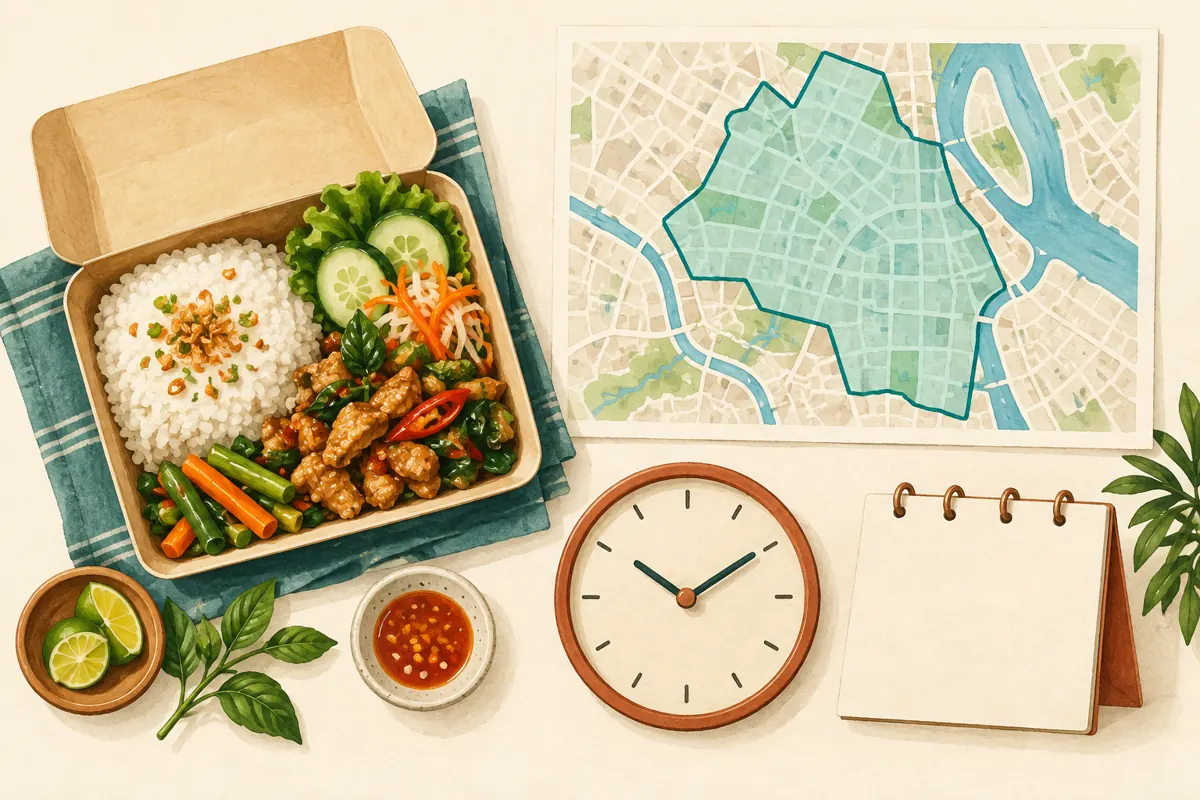
A promotional post has at least two important times: when it appears and when customers must act. Write both into the planning notes, with Cambodia time stated explicitly. Work backwards from the kitchen’s preparation needs. Allow time for readers to see the offer, ask questions and receive an answer before ordering closes. A post that appears just before the deadline may technically meet a publishing agreement while being practically unhelpful.
In the hypothetical catering scenario, the team wants enquiries for a particular weekday delivery. If the partner cannot provide a useful publication window, change the offer to a later service date or postpone the placement. Avoid vague wording such as tomorrow when a post could be scheduled differently from the original draft. Use the actual service date and ensure the photo caption and any accompanying menu show the same information.
Assign a staff member to cover replies during the promotion window. If that person is unavailable, adjust the timing or make the expected response time clear.
6. Review partner edits as changes to the offer
A channel owner may shorten a caption to match its usual style. Review the result for meaning, not just spelling. Removing subject to delivery confirmation can turn an enquiry invitation into an apparent promise. Changing selected office areas to Phnom Penh delivery can expand the offer beyond what the kitchen can fulfil. A more enthusiastic adjective can also introduce a claim the caterer cannot support.
Use a simple comparison process: keep the original draft, read the proposed version beside it and check every commercial condition. Pay particular attention to meal contents, dates, delivery boundaries, extra charges and the contact destination. Nominate one person with authority to approve the final wording. Multiple staff members offering conflicting changes can leave the partner unsure which version represents the business.
Make the promotional relationship understandable to readers, using a clear label such as paid promotion when applicable. Do not let the caption present supplied advertising copy as an independent food review. Save the exact approved text and image together so a later check has a reliable reference.
7. Keep SMM-panel services outside the placement agreement
A channel placement and a panel service address different requests. The supplied bongsmm.com catalogue includes the exact public name Telegram - Premium views - [ MIXED COUNTRY ]. Its name identifies a Telegram views offering, but no supporting description was supplied. The listing therefore does not establish delivery mechanics, audience location, genuine interest or a connection with the partner channel. Treat the wording as a catalogue label, not independently verified evidence.
If the business is considering that service, first ask what documented deliverable would serve its objective. It should not be described internally as buying office-lunch customers or Cambodian reach. Purchased engagement is not evidence of genuine interest, sales, ad delivery or Cambodian users. Do not use it to make a partner placement appear more successful or to persuade future advertisers that a channel has proven local demand.
For a placement test intended to understand customer response, keeping the test free from purchased engagement makes interpretation clearer. If separate panel activity already exists, record its target and timing and disclose that complication in the review. Do not assume ordering views purchases a suggested-post placement.
8. Check the published post before handling enquiries
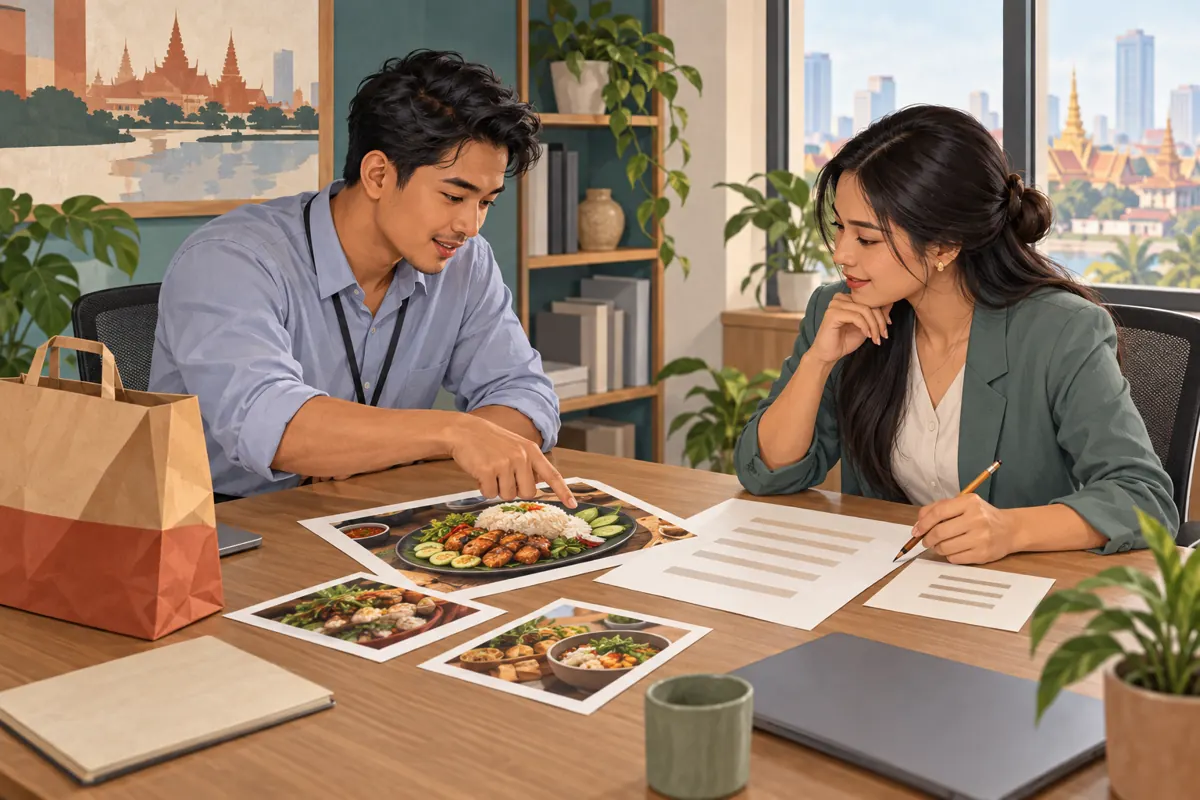
Once publication occurs, inspect the actual post on a phone. Compare it with the approved version, open the enquiry destination and check whether the image remains understandable at normal reading size. Confirm that the contact belongs to the business and that the current menu is available to the staff member answering messages. Save the post reference and the time of this check in the promotion record.
If an important condition is wrong, contact the partner promptly with the exact correction needed. Avoid a vague request to fix the caption. Identify the incorrect phrase, provide replacement wording and explain which customer decision it affects. Pause further sharing of the incorrect offer while the issue is resolved. If enquiries have already arrived, clarify the correct terms directly before accepting any order.
Agree beforehand who handles an expired or unavailable offer. An old promotion may still prompt questions, so staff need a truthful response that distinguishes the advertised service date from current availability.
9. Measure enquiries separately from views and fulfilment
Telegram’s Channels FAQ says post view totals are approximate and include views of forwarded copies. The same person may also be counted again after a period of time. A visible total therefore cannot be treated as a count of unique nearby office buyers. Record it only with the observation time and the limited meaning it actually supports.
Maintain a separate enquiry log with the requested date, general delivery area, meal quantity, source if known and outcome. Ask where the customer saw the offer without making an answer compulsory. Someone may receive a forwarded post from a colleague, so record an uncertain source as uncertain. A relevant enquiry, an accepted order and a completed delivery are different stages and should remain separate.
For the hypothetical caterer, repeated enquiries outside the route would suggest that the boundary needs clearer wording or the channel is a poor fit. Questions about whether drinks are included would point to an unclear offer. These observations can improve the next promotion without inventing a performance claim.
10. Decide whether to repeat, revise or stop
Review the placement after the advertised service date and after outstanding enquiries have been resolved. Compare what was promised, what appeared and what the team could fulfil. Include the placement cost, any separate promotional spending and the staff time needed to answer questions. Use actual business records when assessing whether completed orders justified the effort; a rising counter cannot answer that question.
Repeat only when the placement was understandable, operationally manageable and supported by useful evidence. Revise when the audience context seems appropriate but the offer caused avoidable confusion. Stop when the partner changes material conditions without agreement, cannot provide a suitable publication window or expects misleading claims. Common mistakes include approving only the photograph, overlooking the final caption, confusing submission with publication and treating every incoming message as a sale. A careful decision can be to improve the offer before purchasing any further promotion.

Frequently asked questions
Does submitting a suggested post mean the promotion is already live?
No. Submission, approval and publication are separate stages. Telegram describes a process in which the parties can agree changes before publication or scheduling. Keep the catering team’s preparations tied to the agreed plan, and verify the live post before reporting that the promotion appeared.
Should a small caterer choose the channel with the most subscribers?
Subscriber totals alone cannot establish suitability. First consider whether the channel’s subject and location context fit the offer, whether the publishing window is useful and whether the owner will preserve important conditions. A placement is difficult to evaluate if the kitchen cannot serve the people who enquire.
What if the partner wants to remove the delivery restrictions?
Explain that the restriction determines whether readers can order, and supply a shorter version that preserves its meaning. For example, name the confirmed service areas and invite other readers to ask about availability. Decline the placement if the partner insists on presenting delivery coverage the business cannot provide.
Can panel views prove that the suggested post reached Cambodian buyers?
No. Purchased views do not establish location, purchase intent or genuine interest. The supplied views listing has no supporting description that could resolve those questions. Evaluate actual enquiries and fulfilment records, while acknowledging uncertainty about where customers first encountered the offer.
What should staff do when someone messages after the lunch deadline?
State that the advertised deadline has passed and check whether any current option is genuinely available. Do not silently transfer the customer to a different date or meal. Offer an alternative with its own confirmed conditions, and wait for the customer’s agreement before recording an accepted order.
Explore the current service catalogue, create an account, or ask a specific question through support tickets.
- Telegram: Checklists, Suggested Posts and More Monetization Options for Channels
- Telegram Channels FAQ: What does the eye icon mean?
Prepared with AI assistance. Illustrations explain the workflow and do not represent customer results.