21/10/2026 07:38
A Heart or a Hold Request? Telegram Reactions for Cambodian Flowerpot Shops

A heart beneath a ceramic flowerpot photograph can mean several things: someone likes the glaze, appreciates the photography, or wants to show support. It does not tell a Cambodian shop which size to reserve, whether the buyer needs a saucer, or where an order should go. Before promoting a Telegram channel, decide what reactions are supposed to accomplish and where an actual buying conversation begins. This guide follows a hypothetical Phnom Penh flowerpot shop preparing a new collection announcement. The workflow combines a deliberate reaction setting, clear product information, a separate reservation process, and careful interpretation of any SMM-panel activity.
1. Give reactions one modest job
Start with a sentence the whole team can use: reactions are optional responses to the post; reservations require a conversation and staff confirmation. This avoids an awkward situation in which the person posting photographs treats hearts as demand while the person handling stock assumes nothing has been requested. Write the rule before choosing emoji, because the business process should determine the setting.
In the hypothetical shop, a photograph shows a cream planter beside a leafy plant. One reader may admire the arrangement while another wants the empty pot. Neither interpretation supplies an order. A useful reaction prompt might invite readers to acknowledge a helpful care explanation. Avoid asking them to tap a heart to reserve an item unless a separate, clearly explained process actually records and confirms that reservation. For ordinary retail enquiries, asking for the product reference and required size is easier to verify.
2. Inspect the channel’s reaction controls
Telegram lets group and channel administrators decide whether reactions are enabled and which reaction emoji are available. Its documented route is the channel or group information page, followed by Edit and Reactions. Start there, while allowing for differences in app layout. These are channel controls, so review the setting with the person responsible for publishing. [Telegram’s reaction controls](https://telegram.org/blog/reactions-spoilers-translations).
For the shop, begin with a small selection whose meaning is easy to explain, or leave reactions disabled if nobody has a use for them. Record the chosen setting and the review date in the campaign notes. Ask a colleague using an ordinary subscriber account to inspect a sample post and describe the choices they see. This practical check is more useful than assuming the administrator’s view represents every customer’s experience. Do not change the selection during a comparison period without recording that change.
3. Choose between acknowledgement, research and ordering
Use a simple decision process. If the purpose is a lightweight acknowledgement, reactions may be sufficient. If the shop needs to learn why customers prefer a finish, ask a specific question and collect explanations. If the purpose is to sell or reserve stock, direct readers to the shop’s enquiry contact. Each task needs different information, and a row of emoji cannot reliably perform all three.
Suppose the hypothetical owner is deciding whether to photograph the drainage hole more clearly. A few puzzled responses could justify asking what is unclear, but they cannot establish that the hole caused the reaction. Ask whether readers need to see the base, internal dimensions, or saucer fit. Likewise, do not label the finish with the most hearts as the bestselling finish. A preference about an image and a completed purchase describe different events, even when they concern the same product.
4. Make the product post understandable before promoting it
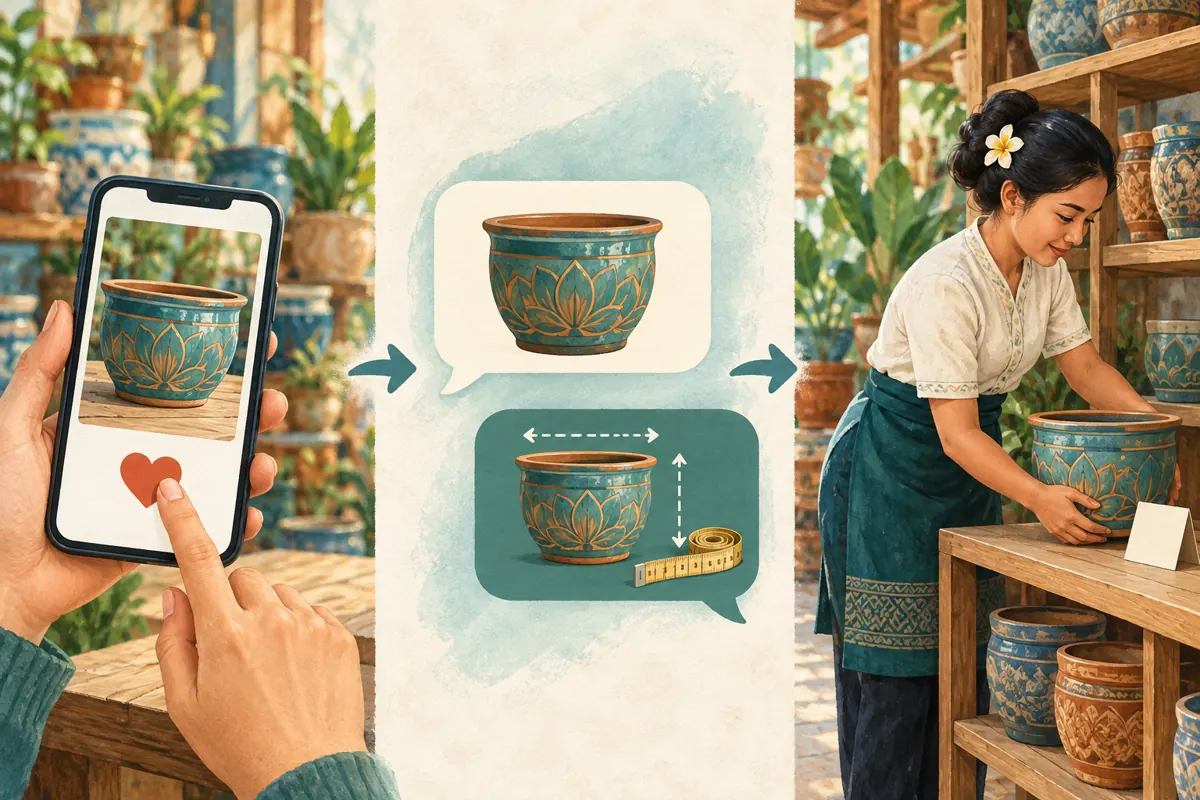
Prepare the photograph and caption as though reactions were unavailable. Give the planter a stable product reference, state the relevant dimensions, and distinguish the outer width from the internal opening. Explain whether the plant and saucer are included. If the photograph contains several sizes, identify which one the quoted offer concerns. These details help a reader move from visual appreciation to a useful question.
For Cambodian customers, use Khmer wording that the shop’s audience understands, retaining model references consistently wherever they appear. This English guide does not imply that the customer-facing caption should be English. State the currency beside any price and explain whether delivery is quoted separately. Have a colleague unfamiliar with the photo answer three questions: what is being sold, which variant is shown, and how should an interested buyer enquire? Correct the post if any answer depends on guessing from a heart or thumbs-up symbol.

5. Write a clear boundary between reacting and reserving
Put the enquiry instruction close to the product details. A hypothetical English drafting example is: “For availability, send the pot reference, preferred size and quantity to our listed shop contact. We confirm a reservation after checking stock. A reaction does not reserve an item.” Adapt the wording naturally for the customer’s language instead of relying on a literal translation. Check that the named contact is the one staff actually monitor.
When an enquiry arrives, the staff member should repeat the requested variant and confirm any unresolved details before setting stock aside. Ask about delivery area or pickup plans when relevant, without requesting a full address in a public discussion. Record the reservation under the shop’s normal order procedure. This creates a traceable handoff: a public post starts the conversation, the customer specifies the request, and staff confirm what the business can supply. No one needs to infer intent from an emoji.
6. Keep Star reactions outside the retail order process
Telegram also offers Star reactions, through which users can support channels with Telegram Stars. That is a different feature from an ordinary emoji response. Telegram describes it as support for creators and channels; its existence should not be presented as a flowerpot checkout mechanism. [Telegram’s explanation of Star reactions](https://telegram.org/blog/superchannels-star-reactions-subscriptions).
If staff encounter this option while reviewing channel settings, discuss it separately from the product campaign. For this shop’s workflow, neither an ordinary reaction nor a Star reaction is accepted as a reservation or a product payment. Tell customers exactly which payment and confirmation process the shop uses if they ask. Avoid vague instructions such as “send support to secure your pot,” which blur channel support and a retail agreement. The team should be able to explain what happened without trying to convert a platform interaction into an undocumented order.
7. Evaluate an SMM listing against the actual task
The supplied bongsmm.com catalogue includes the exact public name “Telegram Mix Negative Reaction [🖕💔👎😢💩🤮🤬😡🥱🍌😈] + Views”. The name indicates a listing combining negative reactions and views, but the brief provides no description. It therefore supplies no basis for claims about audience origin, authentic customer opinion, delivery conditions, or suitability for this shop. A catalogue title is not evidence that the activity represents Cambodian shoppers.
For a campaign intended to learn what customers think about a planter, purchased reactions would undermine that purpose. The sensible decision is to exclude that activity from the feedback exercise. Do not buy reactions to manufacture approval, simulate complaints, or describe an offer as popular. Purchased engagement is not evidence of genuine interest, sales, ad delivery, or Cambodian users. A reaction service also cannot repair a missing measurement or confirm stock. If the intended outcome is clearer enquiries, improve the caption and staff response process first.
8. Separate observations, service records and orders
Maintain three distinct records when reviewing promotion. The first contains observations about the post, including its reference, publication time, reaction setting and wording. The second contains any relevant promotion or service activity, including the target and known timing. The third contains actual customer enquiries and confirmed orders under the shop’s established procedure. Keeping these records separate prevents a service delivery record from becoming an unsupported sales claim.
If purchased activity has affected a post, mark the feedback interpretation as compromised rather than subtracting the purchased quantity and calling the remainder organic. The visible total alone cannot establish that remainder’s origin or intent. For business learning, examine what customers explicitly asked: whether the pot has drainage, whether a matching saucer exists, or whether a larger size is available. Summarise those questions without publishing private customer details. They can guide the next demonstration even when the reaction count cannot support a useful conclusion.
9. Resolve confusing reactions without inventing an explanation
A negative emoji is a reason to inspect the post, not proof that a customer received a defective pot. Check for a misleading photograph, unclear inclusion, missing price context, or a mismatch between the named variant and the picture. If there is a genuine error, correct it clearly. If the meaning remains unknown, invite a specific question through the shop’s established contact route rather than accusing readers or assigning motives.
Positive responses deserve the same restraint. Do not order additional stock solely because the photograph attracts hearts, and do not allocate scarce pieces to an assumed queue of reactors. Another common mistake is changing the enabled emoji to make a campaign appear more favourable while continuing to compare its results with earlier posts. Set a consistent moderation approach, keep a route for substantive questions, and document relevant changes. The aim is an understandable product conversation, not a reaction display that looks reassuring.
10. Review the workflow after the announcement
After the hypothetical collection announcement, review the work with whoever answered enquiries and whoever handled inventory. Look for process failures: did customers send the wrong product reference, assume the plant was included, or believe their reaction held stock? These observations identify concrete revisions. A photo of the empty planter may resolve an inclusion problem; a clearer opening measurement may resolve fit questions.
Keep the reaction setting if it serves its modest purpose and creates no confusion. Adjust the explanation if customers misunderstand it. Consider disabling reactions if the team gains no useful benefit, while keeping the enquiry route clear. Before the next promotion, assign one person to verify product information and another to check the reservation instructions. This review does not require a claim that engagement caused sales. Its practical outcome is a post that customers can understand and a shop team that knows when an enquiry becomes a confirmed commitment.

Frequently asked questions
Can we count hearts as potential buyers?
You can record them as reactions, but calling them potential buyers assumes intent you have not established. A person might like the plant, photograph or shop. For planning stock, rely on explicit enquiries, confirmed reservations and actual sales, while recognising that an enquiry is still not a completed purchase.
Should we disable every negative emoji?
Choose a consistent reaction policy based on the purpose of the channel. Removing a symbol does not resolve an unclear offer or a customer problem. Keep a usable route for questions and complaints, investigate specific issues, and avoid presenting a restricted reaction display as evidence of universal satisfaction.
What if someone says they already reserved a pot by reacting?
Acknowledge the misunderstanding, check availability and explain the confirmation process politely. Do not promise that the item is held before checking stock. Then revise the post so future readers see the reservation instruction beside the product details, and ensure all staff use the same explanation.
Can an SMM panel identify which reactions came from Cambodian customers?
Nothing in the supplied service description establishes that capability. Do not infer location, identity or buying interest from a service name or visible reaction. Where delivery geography matters, ask an enquiring customer for the relevant area during the normal conversation, collecting only the information needed.
What should we change first if reactions arrive but enquiries do not?
Inspect the offer and enquiry path before seeking more engagement. Check whether the exact item, size, inclusions and contact are clear. Test whether staff can answer an availability question promptly. Then revise one identifiable source of confusion and document the change; low enquiry volume alone does not reveal its cause.
Explore the current service catalogue, create an account, or ask a specific question through support tickets.
- Telegram: Reactions, Spoilers, Translation and QR Codes
- Telegram: Super Channels, Star Reactions and Subscriptions
Prepared with AI assistance. Illustrations explain the workflow and do not represent customer results.