22/10/2026 16:39
Too Many Questions to Answer? Pausing YouTube Comments for Cambodian Fan-Cleaning Shops

A useful fan-cleaning video can leave a small shop answering questions while customers wait at the counter. Some viewers want to understand the demonstration; others want a collection time or an update on a fan already delivered. When these conversations accumulate, the shop needs a clear response process before promoting the video further. YouTube’s comment controls can help manage that workload, but they do not manage appointments. This guide explains when a temporary pause makes sense, how to communicate it, and how to reopen discussion responsibly. The shop scenario and sample messages below are hypothetical illustrations, not customer testimonials or reported business results.
1. Identify what is actually overloaded
Imagine a hypothetical fan-cleaning shop in Phnom Penh that publishes a demonstration of removing dust from a detached grille. The person who uploads videos also handles the counter. Questions accumulate about cleaning scope, collection arrangements and existing jobs. The immediate problem is unclear responsibility for answering, rather than simply the number of comments. Start by identifying which conversations require action and who can resolve them.
Separate discussion capacity from workshop capacity. The shop might have room for cleaning appointments but nobody available to review public questions that afternoon. Alternatively, staff might answer promptly while the workshop is fully booked. Those situations need different notices. Write down which constraint applies, the affected video, the staff member responsible and the next review time. This gives the team a reason for the pause and prevents a temporary comment setting from becoming an unexplained permanent barrier.
2. Choose between On, Pause and Off
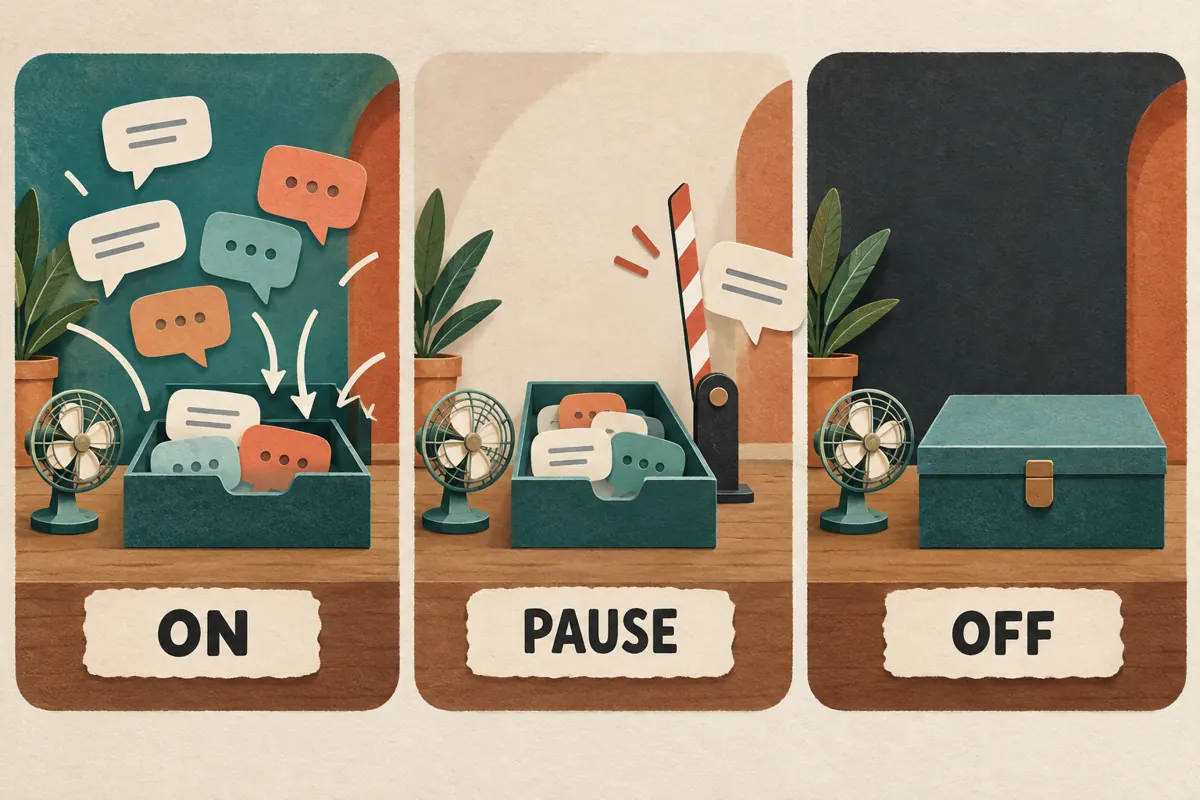
YouTube’s official guidance distinguishes three states. On permits comments, with moderation choices available. Pause keeps existing comments visible while stopping new ones until comments are turned on again. Off prevents commenting and hides existing comments until they are restored. For a temporary backlog where earlier questions remain useful, Pause is usually the closest match. Holding all comments instead continues accepting submissions for review; it does not stop intake.
Make the choice according to the problem. If a manageable discussion needs routine review, leave it open and assign someone to it. If intake must stop briefly, consider a pause. If discussion should remain unavailable, assess whether Off fits the purpose. Avoid treating every critical remark as a capacity problem. A complaint about an unfinished job still needs investigation. Before changing anything, record the current state so another staff member can understand what changed and why.
3. Write the customer notice before changing the setting
Prepare a short, dated explanation in the video description where viewers can find it. State that new video comments are temporarily paused, whether booking enquiries remain open, and when the notice will be reviewed. Use Khmer if that is the language customers normally read, with English only where useful. Have someone check that the translation distinguishes a comment pause from a shop closure or a booking confirmation.
A hypothetical notice might read: “New comments on this video are temporarily paused while we review unanswered questions. Existing appointments remain unchanged. For a booking enquiry, use the shop contact listed below. We will review this notice on Monday afternoon, Cambodia time.” Replace the relative day with a calendar date before publishing. Include a contact route only if someone will monitor it. If new bookings are also closed, say so explicitly instead of sending viewers into another unanswered queue.
4. Apply the change to the correct video
YouTube documents this desktop route: sign in to YouTube Studio, select Content, open the video’s thumbnail, choose Show more, find Comments and ratings, choose the comment setting and save. Select Pause for the temporary arrangement described here. Confirm the video by its title, thumbnail and public URL before saving. A similarly named demonstration may have a different discussion and a different staff owner.
Afterward, open the public video as a viewer and check the notice and visible discussion state. Record the change time and the person who made it. Avoid editing several videos together unless each needs the same treatment. A pause on one busy demonstration should not become a reason to change unrelated content. This verification also catches a practical mistake: preparing an accurate notice but leaving it on a draft document instead of the published video description.
5. Turn unanswered comments into specific tasks
Review the existing questions and group them by the work required. Demonstration questions need a clear explanation of what the video shows. Booking enquiries need an availability check. Existing-job questions need a private conversation linked to the shop’s own records. Keep a compact working list containing the question reference, category, assigned staff member and next action. Avoid copying personal information into a broadly shared marketing document.
For example, “Does this include the motor?” calls for an accurate explanation of the advertised cleaning scope. “Can I bring mine tomorrow?” is an enquiry until the shop confirms acceptance. “Is the fan I left ready?” requires checking the job record. Do not give all three the same generic reply. During the pause, prepare answers and use an established private contact route where appropriate; publish relevant public explanations when discussion resumes. Never promise technical work or collection arrangements that staff have not verified.
6. Keep the booking route usable and private
If the notice directs viewers to a shop contact, test that route from a customer’s perspective. Confirm that the contact belongs to the business, that staff can access it appropriately and that its opening information matches current operations. Decide what information is necessary for an initial enquiry: fan type, requested service and preferred drop-off period may be enough. Ask for additional details only when they are needed to assess the job.
A useful first response explains the next decision. In a hypothetical exchange, staff could say: “Please send the fan type and your preferred drop-off day. We will check availability before confirming.” That wording avoids suggesting a reservation already exists. Keep phone numbers, addresses and job identifiers out of public comments. If a customer voluntarily posts private details, handle the exposure promptly through the available moderation controls and continue the service discussion through the shop’s established private channel.
7. Review SMM panel proposals against the actual need
A shop reviewing bongsmm.com’s supplied catalogue may encounter “YouTube Like ~ Max 50k ~ 50k/days ~ Instant ~ 𝐍𝐎 𝗥𝗘𝗙𝗜𝗟𝗟”. This is a catalogue title for a YouTube likes offering; the supplied description is empty. Its wording does not establish delivery performance, audience location or authentic customer interest. It also provides no basis for assuming comment moderation or enquiry handling is included. Keep the exact title in internal comparison notes without treating its embedded claims as verified facts.
YouTube prohibits artificial increases in engagement metrics and warns that a hired promoter’s actions can affect the channel. Do not order artificial engagement as a way to make a paused discussion appear successful. Purchased engagement is not evidence of sales, genuine interest, Cambodian users or ad delivery. For this workflow, allocate effort to answering questions, improving the demonstration and sharing it through relevant, permitted channels. If an external proposal cannot explain a compliant method and concrete deliverables, decline it.

8. Reopen according to readiness, not appearances
Set a review appointment before leaving the discussion paused. At that review, check whether unanswered questions have an owner, whether the booking notice is accurate and whether someone can monitor new submissions. A completely empty backlog is not always necessary. What matters is that remaining work is understood and incoming questions will receive attention. If staffing is still unavailable, update the notice rather than quietly missing the stated review point.
When ready, restore comments, update the temporary explanation and check the public page again. Keep any useful clarification about cleaning scope or booking requirements. Give the next staff member a brief handover: which video reopened, which questions remain unresolved and where appointments are recorded. Resume additional promotion only when the customer route can support it. Reopening comments is an operational decision; a higher like count does not tell the shop whether it is ready.
9. Avoid mistakes that make the pause confusing
A common mistake is describing the pause as “closed” without saying what is closed. Viewers may interpret that as the workshop shutting down. Another is leaving “comment below to book” in the description while commenting is unavailable. Review the surrounding invitation and give it a truthful replacement. Also avoid offering an exact response deadline unless the responsible person has agreed to it and can reasonably meet it.
Do not use a pause to make dissatisfaction disappear. Preserve legitimate issues in the working queue and investigate them. Do not repeatedly reopen and pause simply to encourage activity around promotional pushes; that makes the contact route unpredictable. Finally, avoid assuming fewer public questions mean fewer customer problems. People may have moved to another channel or stopped trying. Ask staff whether the same confusion is appearing at the counter, and use that evidence to improve the video’s explanation.
10. Measure whether the workflow improved service
Review outcomes that the shop can actually verify. Were unanswered enquiries assigned? Did staff distinguish requested appointments from confirmed ones? Did viewers receive accurate instructions about where to ask? Did the same misunderstanding continue after the description changed? These questions reveal whether the pause helped the team organise work. Keep the review small enough that it can happen alongside normal counter duties.
Separate observations from explanations. If fewer comments arrive after reopening, record that observation without declaring the pause responsible. The video’s exposure, topic and age may also differ. Likewise, do not describe a completed cleaning job as coming from YouTube unless the customer or a reliable booking record supports that connection. Finish the review by choosing one concrete improvement, such as clarifying the service scope or assigning a regular discussion check. Carry that improvement into the next demonstration.
Frequently asked questions
Does pausing comments cancel bookings already requested there?
No booking decision should depend on the comment setting. Check the shop’s appointment records and the conversation with each customer. An unanswered request remains an enquiry; an appointment already confirmed by staff should be handled according to that agreement. The pause notice should explain whether existing arrangements remain unchanged.
Why might I be unable to change a video’s comment settings?
YouTube identifies restrictions involving videos designated made for kids, private videos and supervised experiences. Check the video and account context before assuming a technical fault. Do not change an accurate audience designation merely to enable comments. Keep a suitable business contact route available where appropriate.
Should the shop pause every video during a busy period?
Review the workload first. One demonstration may generate appointment requests while another attracts occasional general questions. Apply the decision to the actual situation and assign coverage where possible. If the whole shop cannot monitor discussion, prepare a consistent explanation, but still verify each affected video and its customer instructions.
How long should a temporary pause last?
Choose a review point based on staff availability rather than an arbitrary marketing schedule. Name the person who will assess readiness. If the shop needs more time, update the dated explanation and confirm that any advertised alternative contact still works. An unattended pause with an expired notice creates avoidable uncertainty.
Can an SMM panel resolve the unanswered questions?
Do not infer that capability from a likes or subscriber listing. The supplied catalogue descriptions do not establish an enquiry-management service. Any separately proposed support arrangement would need clear responsibilities, suitable access and a compliant method. The shop still needs someone authorised to explain service scope and confirm appointments.
Explore the current service catalogue, create an account, or ask a specific question through support tickets.
- YouTube Help: Learn about comment settings
- YouTube Help: Choose comment settings
- YouTube Help: Fake engagement policy
Prepared with AI assistance. Illustrations explain the workflow and do not represent customer results.