20/10/2026 04:22
Who Should the Courier Contact? Telegram Handoffs for Cambodian Delivery Shops

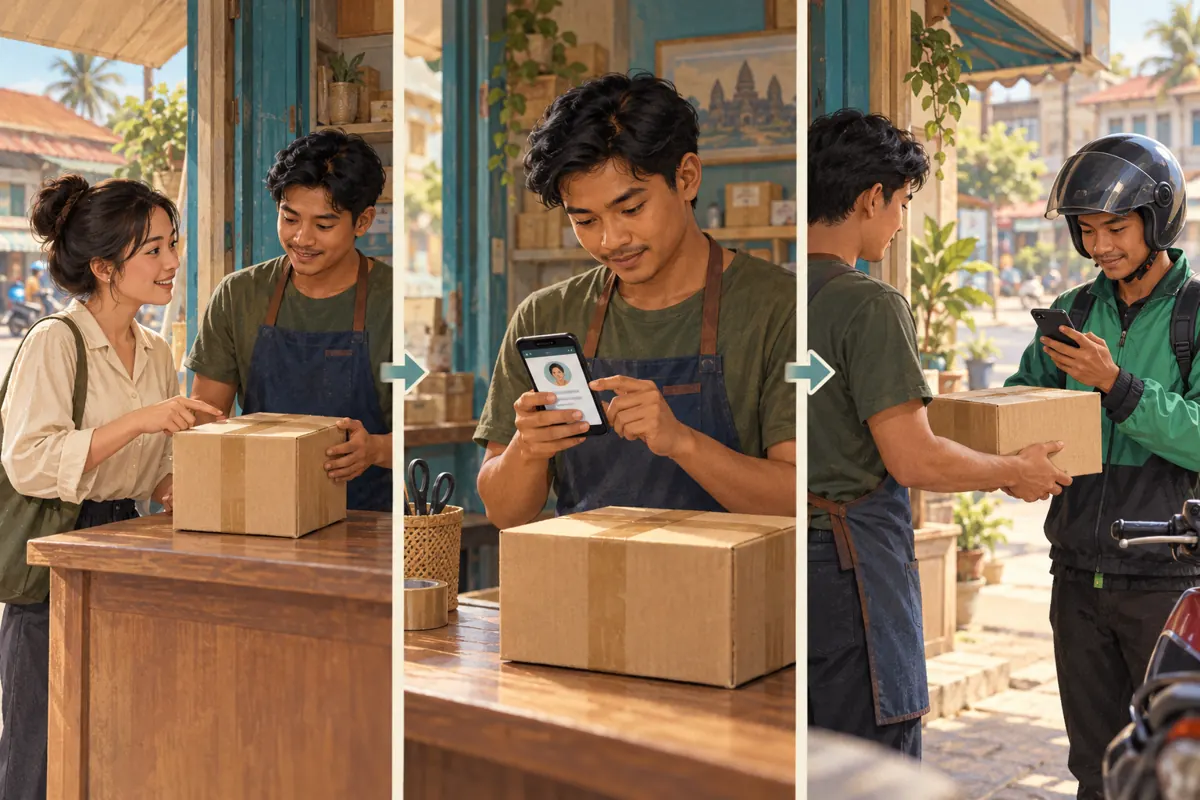
A delivery promotion can explain parcel sizes, service areas and booking hours perfectly, yet the job can still stall when the courier receives the wrong contact. The person asking for a quote may be the sender, while someone else will receive the parcel. A familiar display name does not resolve that difference. For Cambodian delivery shops promoting their services through Telegram, the useful next step is a careful handoff from the enquiry conversation to the person doing the delivery. This workflow explains when to share a phone contact, when a Telegram username is enough, and what to confirm before passing either along. It also shows where an SMM-panel service belongs in the records without treating purchased engagement as a delivery lead.
1. Separate the person enquiring from the person receiving
Start by identifying the roles in the delivery. Who is requesting the service? Who can release the parcel? Who can receive it? Who can approve a change? One person may fill every role, but staff should establish that through the conversation. A contact stored under a shop name might reach the cashier rather than the person waiting at the destination.
In a hypothetical Phnom Penh example, a clothing seller asks a delivery shop to collect a parcel and take it to a customer’s workplace. The seller’s Telegram account is useful for collection questions. The recipient’s agreed contact route is useful for arrival questions. Sending only the seller’s card leaves the courier dependent on a relay of messages. Sending both without identifying their roles creates a different confusion.
2. Choose between a phone contact and a Telegram username
Telegram supports shared contact messages. Its technical documentation describes phone-contact information that includes a name and phone number, with possible additional contact data. Treat a contact card as information being disclosed, and inspect what it contains before sharing. A username is a different route: Telegram’s FAQ explains that public usernames allow people to find and message an account without knowing its phone number.
Choose according to the task. If the courier needs an agreed ordinary telephone call on arrival, confirm the number intended for that purpose. If the recipient prefers Telegram messages, establish a working Telegram route instead. A username alone does not provide a telephone number, and neither route promises a response. Telegram documents these distinctions in its FAQ at https://telegram.org/faq and contact specification at https://core.telegram.org/bots/api#contact.
3. Ask for a specific handoff agreement
Before passing contact information to a courier, explain who will receive it and why. A hypothetical message could say: “For this delivery, may we give the assigned courier this contact so they can arrange arrival?” If the sender provides someone else’s details, ask them to confirm that the recipient expects the delivery and agrees to that contact route. An unanswered question remains unresolved.
Keep the request proportionate. An initial service-area enquiry rarely needs a recipient’s full contact record. Collect delivery details when the conversation reaches that stage. If the customer prefers the shop to coordinate everything, assess whether staff can reliably relay arrival messages. Agree on that arrangement explicitly, including what happens if nobody answers, before accepting a delivery that depends on immediate contact.
4. Check the card before selecting the destination chat
Open the intended contact and inspect the name and number available to share. Look for an old business line, a personal number mixed into a shop record, or two people saved under similar names. Ask the customer to confirm any ambiguity. Use Telegram’s contact-sharing option where available; its placement can vary between clients. Telegram’s official interface wording includes “Share contact” at https://translations.telegram.org/en/unigram/private_chats/ShareContact.
Next, inspect the destination chat before sending. Confirm that it belongs to the assigned courier or the restricted operational conversation used for this job. Do not choose a familiar avatar without checking the account. After sending, review the resulting message and its surrounding instructions. If the interface does not provide a clear contact-sharing route, ask for an agreed alternative instead of improvising from an old screenshot.

5. Add the delivery role beside the contact
A card needs a short explanation. Send the delivery reference, whether the person is the sender or recipient, the agreed contact method, and the next action. Keep destination instructions in the same operational context so the courier can connect them to the correct parcel. A bare card can easily become detached from its purpose when several jobs arrive close together.
For example, a hypothetical handoff could read: “Recipient for the blue-wrapped parcel. Message on Telegram before arrival. The recipient will confirm the entrance. Contact the shop if there is no reply; do not leave the parcel without confirmation.” Adapt the wording to the actual agreement. Record payment and collection instructions separately where needed, because possessing someone’s contact details does not establish who owes money or can authorize a change.
6. Test the process using staff-owned information
Before promoting a new delivery offer, rehearse the handoff with staff-owned contact information and a clearly labelled practice job. Have one colleague act as the enquirer and another as the courier. Check whether the receiving colleague can identify the contact’s role, understand the requested action and find the relevant delivery instructions. No real customer record is needed for this exercise.
Include one deliberate ambiguity, such as two contacts with similar names or a sender who is different from the recipient. Ask the colleague to explain what they would verify before proceeding. The exercise should reveal missing context rather than reward fast tapping. If the process depends on one experienced employee remembering everything, rewrite the handoff message so another staff member can complete the same checks.
7. Make the promotion lead into this workflow
Write the public post around what a prospective customer needs to establish first: collection area, destination area, parcel type and requested timing. State which details the shop will confirm privately before accepting the job. This makes the enquiry easier to answer while keeping personal delivery information out of public comments. Use clear Khmer wording for customers who prefer Khmer, with other language support only where staff can provide it.
A hypothetical promotional instruction could say: “Message the shop with the collection and destination areas and a brief parcel description. We will confirm availability and the recipient contact arrangement privately.” Avoid asking people to publish phone numbers beneath the post. Also avoid making a contact card the first compulsory response: someone comparing delivery options may reasonably need an answer about coverage before sharing another person’s details.
8. Keep SMM-panel activity outside the customer handoff
The supplied public catalogue includes the exact service name “Telegram Post Views.” Its description is empty, so the name supports identifying it as a post-view service but supplies no basis for claims about audience location, unique people, timing or delivery enquiries. Anyone considering it should review the current service terms and applicable platform rules before deciding whether it serves a legitimate purpose.
A post-view service cannot verify a recipient’s contact, obtain permission to share it, arrange a courier or confirm a booking. Purchased engagement is not evidence of genuine interest, sales, ad delivery or Cambodian users. Keep any panel order reference with the promotional post record. Customer contact cards belong in the authorized delivery workflow; they should not be supplied as evidence to explain a promotional count.
9. Repair a wrong contact before continuing
If a courier reports an unexpected person or an outdated number, pause the contact attempt and return to the original enquiry. Confirm which role needs a replacement contact and obtain the corrected information from the responsible person. Send a clear correction tied to the delivery reference. Ask the courier to acknowledge which contact they will now use, especially when the earlier card remains visible in the conversation.
Do not assume that changing a saved name updates every copy already shared or saved by someone else. Treat previously sent details as information the recipient may still hold. If the card went to the wrong chat, use available removal controls where appropriate and ask the unintended recipient not to use or redistribute it. The immediate operational priority is to stop further mistaken contact and correct the authorized handoff.
10. Review handoff quality alongside promotion results
Keep three records distinguishable: the promotional post and any service order, the genuine enquiry, and the accepted delivery task. Telegram’s Channels FAQ explains that channel view counts are approximate and include views from forwarded copies. That makes a view counter unsuitable as a list of identifiable prospective customers. The official explanation is at https://telegram.org/faq_channels. Assess delivery progress through the actual conversation and job record.
At review time, examine practical failures: a recipient was confused with a sender, the courier received an outdated card, or nobody knew who should approve a changed arrival time. Turn each finding into a specific adjustment to the handoff template. Common mistakes include sharing an entire chat history, forwarding cards to broad staff groups, and marking a job confirmed merely because a contact arrived. A completed contact exchange is only one step in accepting and fulfilling a delivery.

Frequently asked questions
Does sharing a Telegram contact card confirm a delivery booking?
No. It supplies contact information. A booking still needs the shop’s acceptance and agreement on the relevant collection, destination, parcel, timing and payment details. Mark the delivery as accepted only when those requirements are resolved. Otherwise staff may dispatch a courier for an enquiry that the customer has not committed to.
What if the recipient wants Telegram messages but will not share a telephone number?
Ask whether the agreed Telegram route is sufficient for the job. If the courier requires telephone contact, explain that requirement before accepting the delivery and discuss an alternative, such as coordination through the sender. Do not promise that a username enables an ordinary telephone call or guarantees that the recipient will respond.
Should the courier receive the customer’s whole conversation with the shop?
Usually a focused handoff is more useful. Extract the agreed delivery instructions, the relevant contact and any unresolved action. A full conversation can contain unrelated purchases, personal details or superseded arrangements. If a specific message is necessary to explain an instruction, review its content and context before sharing it with the authorized recipient.
Can more Telegram post views show that the handoff process is working?
No. Views do not tell you whether the right recipient was contacted or whether a delivery was accepted and completed. Review real operational records for those questions. If promotional activity overlaps with incoming enquiries, record the timing and any customer-reported source without presenting that overlap as proof that a purchased service caused the enquiry.
What should staff do when two saved contacts look identical?
Stop and verify through the original enquiry rather than guessing from the avatar or display name. Confirm which person fills the required delivery role and which contact route they approved. Add enough operational context to distinguish the correct record, then check the shared card again before sending it to the courier.
Explore the current service catalogue, create an account, or ask a specific question through support tickets.
- Telegram FAQ — Usernames and contact information
- Telegram Bot API — Contact data fields
- Telegram Translations — Share contact interface wording
- Telegram Channels FAQ — Channel view counts
Prepared with AI assistance. Illustrations explain the workflow and do not represent customer results.